A Beginner's Guide to Tea Cuisine (茶菜入门指南)
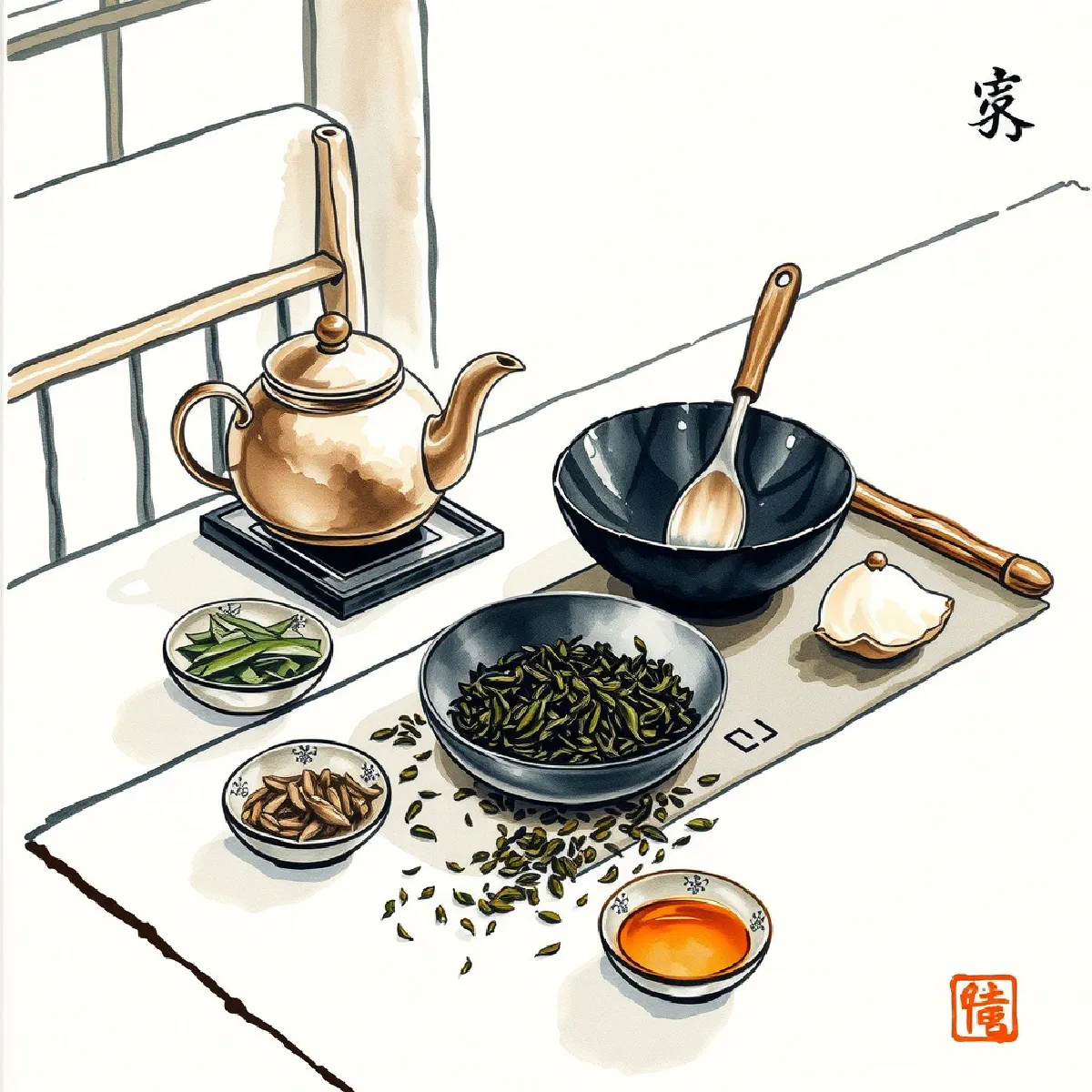
What Is Tea Cuisine, Anyway?
You probably think of tea as something you drink. That makes sense — most of us do. But tea has been used as a cooking ingredient for centuries across Asia, and the concept is beautifully simple: treat tea leaves like you would any aromatic herb or spice.
Tea cuisine (茶菜, chá cài) means using tea as a seasoning — not just a brewing liquid — to infuse dishes with its distinctive aromas, flavors, and even colors. Think of the smoky depth of Lapsang Souchong in a braised pork belly, the floral lift of jasmine rice, or the delicate green tea notes in a steamed fish. Tea can be used dry (ground into a rub), wet (steeped as a broth), or even smoked (burned to produce fragrant smoke).
And here’s the best part: you don’t need special equipment or rare ingredients. Your kitchen cabinet probably already has everything you need to make your first tea dish tonight.
Why Cook with Tea?
Three good reasons, from most obvious to most surprising.
Flavor You Can’t Get Any Other Way
Tea brings something unique to the table. The tannins add a subtle bitterness that balances richness (think: braised fatty meats). The aromatic compounds — floral, grassy, smoky, earthy — layer complexity onto a dish in ways that spices alone can’t. No single spice tastes quite like a good oolong or a floral jasmine green tea.
Health Benefits (That Actually Survive Cooking)
Yes, some antioxidants degrade with heat. But many beneficial compounds in tea — like theanine (calming amino acid) and certain catechins — remain active even after cooking. Tea-smoked foods skip the heavy oil of frying. Tea-braised meats use minimal added fat. And replacing even part of the salt or soy sauce in a recipe with tea flavor can reduce sodium without sacrificing taste.
A Beautiful Cultural Tradition
Cooking with tea connects you to culinary traditions across China, Japan, Taiwan, and beyond — from street-side tea egg vendors in Taipei to the elegant matcha sweets of Kyoto’s tea houses. You’re not just making dinner; you’re participating in a long, delicious history.
Getting Started: 3 Easiest Tea Dishes for Beginners
If you’ve never cooked with tea before, start here. These three recipes are forgiving, hard to mess up, and delicious.
1. Tea Eggs (茶叶蛋)
The ultimate beginner dish. You simply hard-boil eggs, gently crack the shells (don’t peel!), then simmer them in a broth of black tea, soy sauce, star anise, and cinnamon for a few hours. The cracked shells create a beautiful marbled pattern on the egg whites, and the tea infuses all the way through.
Why it’s perfect for beginners: No precise timing. No special tools. The eggs get better the longer they sit. And they’re nearly impossible to ruin — even if you oversimmer, you just get deeper flavor.
2. Tea-Smoked Tofu
Smoking sounds fancy, but it’s actually dead simple at home. Line a wok with foil, layer in raw rice, sugar, and loose black tea leaves. Place a rack over the mixture, set your tofu (or chicken, or fish) on the rack, cover tightly, and heat until the mixture smokes. In about 10 minutes you get deeply fragrant, golden-brown smoked food.
Why it’s perfect for beginners: The smoke does most of the work. You don’t need to marinate for hours. The technique works for tofu, chicken wings, duck breast, even hard-boiled eggs.
3. Jasmine Tea Rice (茉莉花茶饭)
This one is almost too easy. Cook your rice as usual, but replace half the water with strongly steeped jasmine green tea. That’s it. The rice comes out subtly floral, slightly fragrant, and pairs beautifully with stir-fries, roasted vegetables, or simply with a fried egg on top.
Why it’s perfect for beginners: It’s just rice. If you can cook rice, you can make jasmine tea rice. No extra steps, no special technique — just swap the liquid.
Pro tip: Use a jasmine green tea with actual jasmine flowers — the aroma holds up better through cooking.
Key Principles of Tea Cooking
Before you branch out beyond the beginner dishes, tuck these principles away. They’ll save you from the most common mistakes.
Match the Tea to the Dish by Intensity
Not all teas are created equal for cooking. Think about intensity:
- Strong, bold teas (Lapsang Souchong, Yunnan black, Pu-erh) can stand up to braised meats, heavy sauces, and long cooking times.
- Delicate, subtle teas (white tea, light green tea, highly floral oolongs) work best with gentle cooking — quick steaming, light poaching, or cold preparations.
- In the middle (most oolongs, standard black teas like Keemun or Ceylon) are your everyday cooking teas — versatile and forgiving.
Tea Is a Seasoning, Not a Main Ingredient
This is the single most important principle. Tea should enhance a dish, not dominate it. Think of it like bay leaves or black pepper — you want to taste the result without necessarily identifying the source. If someone takes a bite and says “this tastes like tea,” you probably used too much.
Start with a small amount. You can always add more, but you can’t take it out.
Don’t Use Your Premium Tea (But Don’t Use Dust Either)
Your prize Da Hong Pao that costs ¥500 per 50g? Save it for gongfu sessions — the subtle notes you paid for will be lost in cooking.
But also don’t use tea dust from the bottom of the bag. Cheap, broken-leaf tea releases bitterness too quickly and lacks the complex aromatics you want. The sweet spot is mid-range loose-leaf tea — good enough to have character, affordable enough that you won’t wince when using a tablespoon in a braise.
Temperature Matters — A Lot
Some teas turn bitter when overheated. Here’s a rough guide:
- Green tea: Steep at 70–80°C (158–176°F) — no boiling. If using in cooking, add it near the end or use the steeped liquid
- White tea: Even more delicate — 65–75°C (149–167°F)
- Oolong: 85–95°C (185–203°F) — versatile, can handle some heat
- Black tea: 90–100°C (194–212°F) — tough enough for boiling
- Pu-erh: 95–100°C (203–212°F) — can take full heat
Golden rule for cooking: It’s usually safer to steep tea first in water at the right temperature, then use the liquid in your dish, rather than boiling dry tea leaves directly in the pot.
Tea-to-Dish Pairing Guide
Keep this simple chart handy. It’s not exhaustive, but it covers 90% of what you’ll cook.
| Tea Type | Best Uses |
|---|---|
| Black tea (Keemun, Ceylon, Yunnan, Lapsang Souchong) | Braised meats, eggs, smoked dishes, marinades, baked goods |
| Green tea (Longjing, Sencha, Biluochun) | Light seafood (steamed fish, shrimp), vegetables, salads, desserts |
| Oolong (Tieguanyin, Dahongpao, Oriental Beauty) | Stir-fries, steamed dishes, chicken, seafood soups |
| Pu-erh (raw or ripe) | Braised pork, rich stews, mushroom dishes, red meat |
| Jasmine / Scented teas | Chicken, rice, light seafood, custards, ice cream |
| Matcha (powdered green tea) | Noodles, pastries, smoothies, sauces, everything |
Common Mistakes to Avoid
1. Using Too Much Tea
The #1 beginner mistake. A tablespoon of loose-leaf tea per liter of liquid is a good starting point. Remember: tea is a seasoning. You can always brew more concentrated liquid and add it, but you can’t un-bitter a dish.
2. Steeping Too Long
This is how tea gets bitter. If you’re brewing tea to use as a cooking liquid, steep for 3–5 minutes (or follow the tea’s standard brewing time), then strain the leaves out. Don’t let the leaves sit in the liquid for hours unless the recipe specifically calls for it (like tea eggs, where the eggs themselves absorb the liquid slowly).
3. Wrong Tea for Wrong Dish
Using a delicate green tea in a heavy soy-based braise is like bringing a whisper to a rock concert — you won’t taste it. Match intensity with intensity. Light teas for light dishes, bold teas for bold dishes.
4. Overheating Delicate Teas
Dumping green tea leaves into a boiling pot of stew will release bitter tannins and destroy the delicate floral notes. If a recipe calls for green tea in a hot dish, steep it separately at the right temperature and add the liquid near the end of cooking.
5. Ignoring the Natural Salt/Sugar in Your Dish
Tea interacts with salt, sugar, and umami (from soy sauce, broth, mushrooms). A pinch of salt can mellow tea bitterness. A touch of sugar can accentuate floral notes. Taste and adjust.
Next Steps: Where to Go from Here
You’ve got the principles. You’ve got the starting recipes. Now go make something!
- Start with tea eggs — they’re the gateway dish for a reason
- Level up with tea-smoked tofu — the technique feels magical the first time
- Try Pu-erh braised pork when you’re ready for a showstopper
- Explore Longjing shrimp for a classic Hangzhou dish
- Don’t forget matcha desserts when you want something sweet
And remember: nobody gets it perfect the first time. Your first tea egg batch might be too salty, your first smoke might be a little faint. That’s okay. Tea cuisine is about exploration and play. The leaves are cheap, the process is forgiving, and the rewards are genuinely delicious.
Happy cooking — and happy drinking the rest of that tea while you cook! 🍵
Have you tried cooking with tea? Share your experience in the comments below, or tag your photos with #TeaCuisine for a chance to be featured!