Black Tea Braised Ribs (红茶烧排骨): Tender Pork Infused with Aromatic Tea
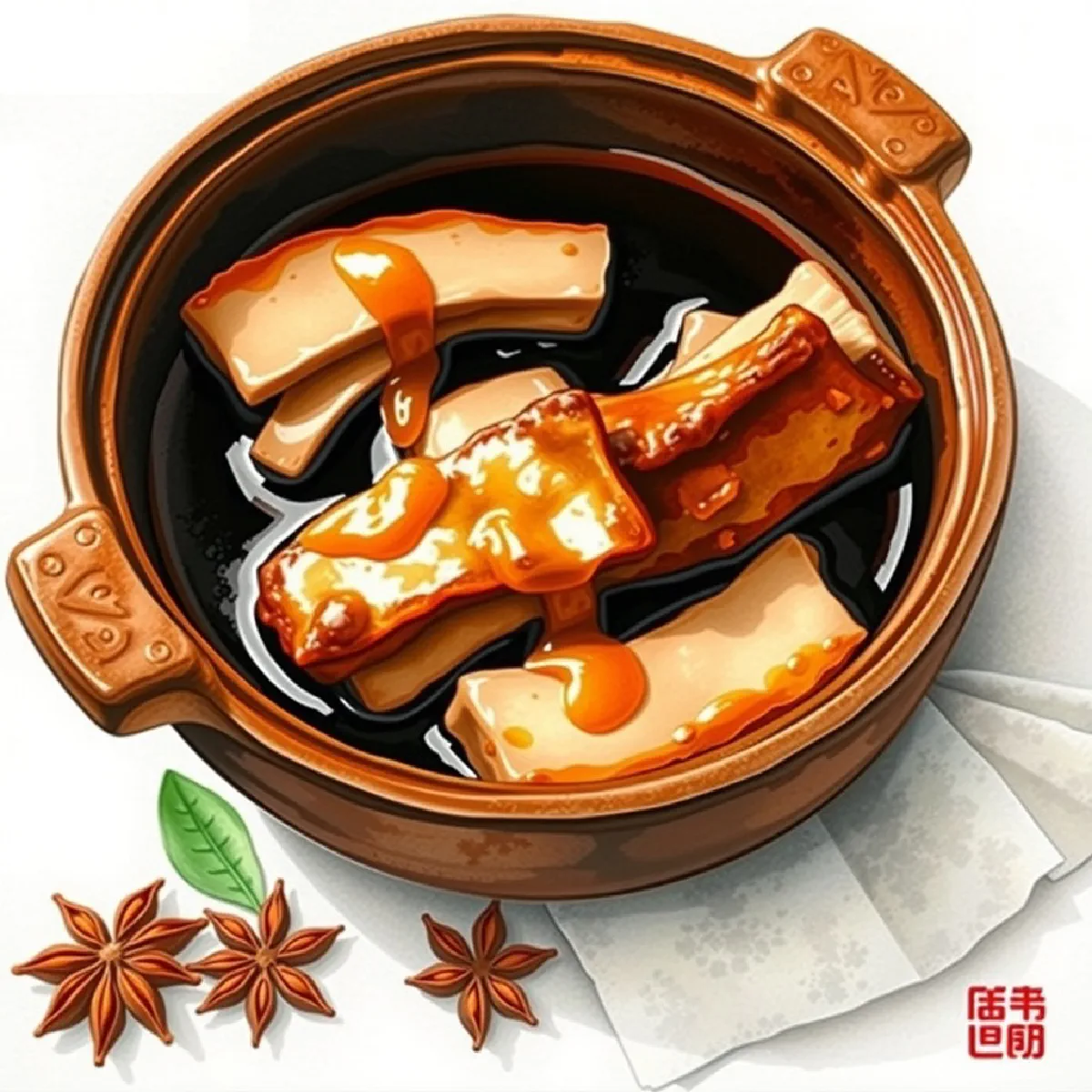
The Magic of Black Tea and Pork Ribs
The deep, malty richness of Chinese black tea (红茶, hóngchá) paired with fall-off-the-bone pork ribs creates something close to alchemy. The tannins cut through the fat like a knife through butter, while the tea’s aromatic compounds infuse the meat during the long braise, adding layers of flavor that no soy sauce or spice can replicate alone.
This is 红茶烧排骨 (hóngchá shāo páigǔ) — comfort food elevated by tea, and easier to make than you’d think.
Why Black Tea?
Not all black teas are created equal when it comes to cooking. The fuller-bodied, more aromatic teas stand up best to the richness of pork. Here are the three I reach for most often:
Keemun (祁门红茶) — The Fragrant Classic
China’s most famous black tea, grown in Anhui Province. Its aroma — floral, subtly smoky, with hints of stone fruit — brings elegance to the braise, mingling beautifully with star anise and ginger. Best when you want the tea present but not dominant.
Dianhong (滇红) — The Bold Workhorse
From Yunnan, this is the tea you want when you mean business. Golden-tipped leaves yield a deep amber liquor with notes of malt and chocolate — robust enough to stand up to dark soy sauce and caramelized sugar. Best for first-timers: bold, unmistakable, and forgiving.
Lapsang Souchong (正山小种) — The Smoky Rebel
A Fujian tea dried over pinewood fires, giving it a bold, smoky character. It infuses the ribs with a faint campfire aroma — like the best barbecue, but made entirely from tea. Best for surprising your guests with deep, smoky complexity from your home kitchen.
My recommendation: Start with Dianhong for your first time. It’s forgiving, affordable, and its bold maltiness pairs perfectly with pork. For the recipe below, I’ve written it for Dianhong, but feel free to substitute any of the three.
Recipe: Black Tea Braised Ribs (红茶烧排骨)
Prep Time: 20 minutes
Cook Time: 1.5 – 2 hours
Serves: 4
Ingredients
| Ingredient | Amount | Notes |
|---|---|---|
| Pork spare ribs (or baby back ribs) | 1.5 kg (3.3 lbs) | Cut into individual ribs |
| Dianhong (or your black tea of choice) | 3 tablespoons loose leaf | Or 3-4 tea bags |
| Boiling water | 4 cups | For brewing the tea |
| Neutral oil | 2 tablespoons | Vegetable, canola, or peanut |
| Rock sugar | 3 tablespoons | Or brown sugar |
| Fresh ginger | 5 slices, smashed | About 2-inch piece |
| Garlic cloves | 5, smashed | |
| Star anise | 3 whole pods | |
| Cinnamon stick | 1 | 2-inch piece |
| Dried red chili peppers | 2 (optional) | For heat |
| Light soy sauce | 3 tablespoons | |
| Dark soy sauce | 2 tablespoons | For color |
| Shaoxing wine | 3 tablespoons | Or dry sherry |
| Scallions | 4 | Cut into 2-inch pieces |
Instructions
Step 1: Brew the Black Tea
- Bring 4 cups of water to a boil
- Add the Dianhong leaves, remove from heat, and steep for exactly 5 minutes
- Strain the tea leaves, reserving the liquid
- Don’t over-steep: Black tea becomes bitter if left too long. 5 minutes is the sweet spot for a full-flavored but not astringent brew.
Step 2: Blanch the Ribs
- Place the ribs in a large pot and cover with cold water
- Bring to a boil and cook for 3-4 minutes — you’ll see scum rise to the surface
- Drain the ribs and rinse them under warm water
- Pat dry thoroughly with paper towels
- Why blanch? This removes impurities and excess blood, giving you a cleaner, more refined final sauce
Step 3: Caramelize the Sugar
- Heat 2 tablespoons of oil in a heavy-bottomed pot or Dutch oven over medium-high heat
- Add the rock sugar and stir constantly
- Watch for the sugar to melt, bubble, and turn a deep amber — this takes 2-3 minutes
- The moment it reaches a rich caramel color, add the ribs immediately — burned sugar tastes bitter
Step 4: Sear the Ribs
- Add the blanched and dried ribs to the caramelized sugar
- Toss well to coat each rib in the caramel
- Sear for 3-4 minutes, turning occasionally, until the ribs are browned on all sides
- Add the ginger, garlic, star anise, cinnamon, and dried chilies (if using)
- Stir-fry for 1 minute until fragrant
Step 5: Build the Braising Liquid
- Add the Shaoxing wine and let it sizzle for 30 seconds
- Add light and dark soy sauces — stir to combine
- Pour in the strained black tea — it should almost cover the ribs
- Add the scallion pieces
- Bring to a boil, then reduce heat to the lowest simmer
Step 6: Braise
- Cover and simmer gently for 1.5 hours, stirring every 20-30 minutes
- Test a rib — it should be tender but not falling apart
- For fall-off-the-bone: Continue for another 30 minutes
Step 7: Reduce the Sauce
- Remove the lid and increase heat to medium-high
- Let the sauce bubble and reduce for 5-8 minutes, stirring occasionally
- The sauce should thicken to a glossy glaze that coats the ribs
- Taste and adjust — a pinch of salt or an extra teaspoon of sugar if needed
- Remove whole spices before serving
The Science: How Black Tea Transforms Your Ribs
Tannins as Tenderizers
Black tea is rich in tannins — the same polyphenolic compounds that give tea its characteristic astringency. When you braise meat in tea, these tannins interact with the proteins in several beneficial ways:
- Breaking down collagen: Tannins help denature collagen proteins, accelerating the breakdown of connective tissue into succulent gelatin
- Fat emulsification: The astringent compounds help break up fat globules, making the dish feel lighter and less greasy
- Flavor penetration: Tea tannins are water-soluble and small enough to penetrate deep into the meat fibers, carrying their aromatic compounds with them
The Bitterness Trap
Black tea can turn bitter if you’re not careful — it has more caffeine and oxidized polyphenols than green or oolong tea. The fix: steep for exactly 5 minutes at 90-95°C (195-205°F). Don’t brew it double-strength thinking “more tea = more flavor.” Stick to the amounts specified and you’ll get perfect results every time.
The Maillard Synergy
During the initial searing, you’re creating the Maillard reaction — the chemical process behind deep, savory “browned” flavors. Adding black tea introduces additional complex sugars and amino acids from the tea leaves, creating a richer, more layered flavor profile than meat alone can achieve.
Why This Works Better Than Red Wine
Many Western braised dishes use red wine for acidity and depth. Black tea does something similar but better: its gentle acidity (pH 5.5) won’t toughen meat like wine does (pH 3.5), it adds aromatic complexity without overwhelming, and there’s no alcohol to cook off. It’s also allergen-free and naturally vegan — a more versatile braising liquid by far.
Pro Tips for Perfect Results
Choosing Your Ribs
- Spare ribs are meatier with more fat — great for long braises and more forgiving
- Baby back ribs are leaner — cook slightly faster (check at 1 hour 15 minutes)
- Ask your butcher for ribs cut into 2-3 inch sections
Make-Ahead and Reheating
This dish is better the next day — the flavors meld and deepen overnight as the tea aromatics continue to penetrate the meat.
- To make ahead: Cool completely, refrigerate in the braising liquid, and reheat gently the next day
- Freezing: Freeze in an airtight container for up to 3 months. Thaw overnight in the fridge before reheating
Troubleshooting
- Too bitter? You over-steeped. Next time steep for 3-4 minutes. Dilute with a splash of water and add a teaspoon of sugar
- Not enough tea flavor? Use a stronger tea (Dianhong over Keemun), or increase to 4 tablespoons
- Sauce too thin? Uncover and simmer on medium-high for 10-15 minutes until it glazes the ribs
- Sauce too thick? Add a splash of hot water or chicken stock
Serving Suggestions
The Classic: Serve over steamed jasmine rice. The fluffy rice soaks up the dark, tea-infused sauce, and the floral notes of jasmine echo the tea beautifully.
With Greens: Pair with blanched bok choy or gai lan (Chinese broccoli). The clean, slightly bitter greens provide a perfect contrast to the rich, sweet-savory ribs.
The Tea Pairing: Serve the same black tea you cooked with — a pot of Dianhong or Keemun alongside the meal. Its natural astringency cleanses your palate between bites, making each mouthful taste as satisfying as the first.