Lei Cha (Hakka Thunder Tea - 擂茶): The Tea You Eat With a Spoon
A Bowl, a Stick, and a Very Old Idea
Most of this site is about tea you sip. Lei cha (擂茶, “pounded tea”) is tea you grind into a paste with nuts, seeds, and herbs, whisk with hot water, and eat as a thick green soup, often poured over rice. It is the signature dish of the Hakka people, the “guest families” who migrated south through Guangdong and Fujian and carried it on to Taiwan, Malaysia, Singapore, and Indonesia. A close cousin survives in northern Hunan.
If you have ever wondered what tea tasted like before steeping loose leaves became the norm, this is the closest living answer. Grinding tea leaves into powder was mainstream in Song dynasty China. That habit faded on the mainland but carried on in Japan as matcha, and in Hakka kitchens as lei cha.
Where It Comes From
The origin stories are legends, but they agree on the recipe’s bones. One version has a Three Kingdoms army doctor curing plague-stricken soldiers with a paste of tea leaves, wild ginger, and rice. Another traces it to a Hakka soldiers’ “three raw ingredients soup” of the same three things. Whatever the truth, the core has always been the same: tea, something starchy, and something warming, pounded together and drunk hot.
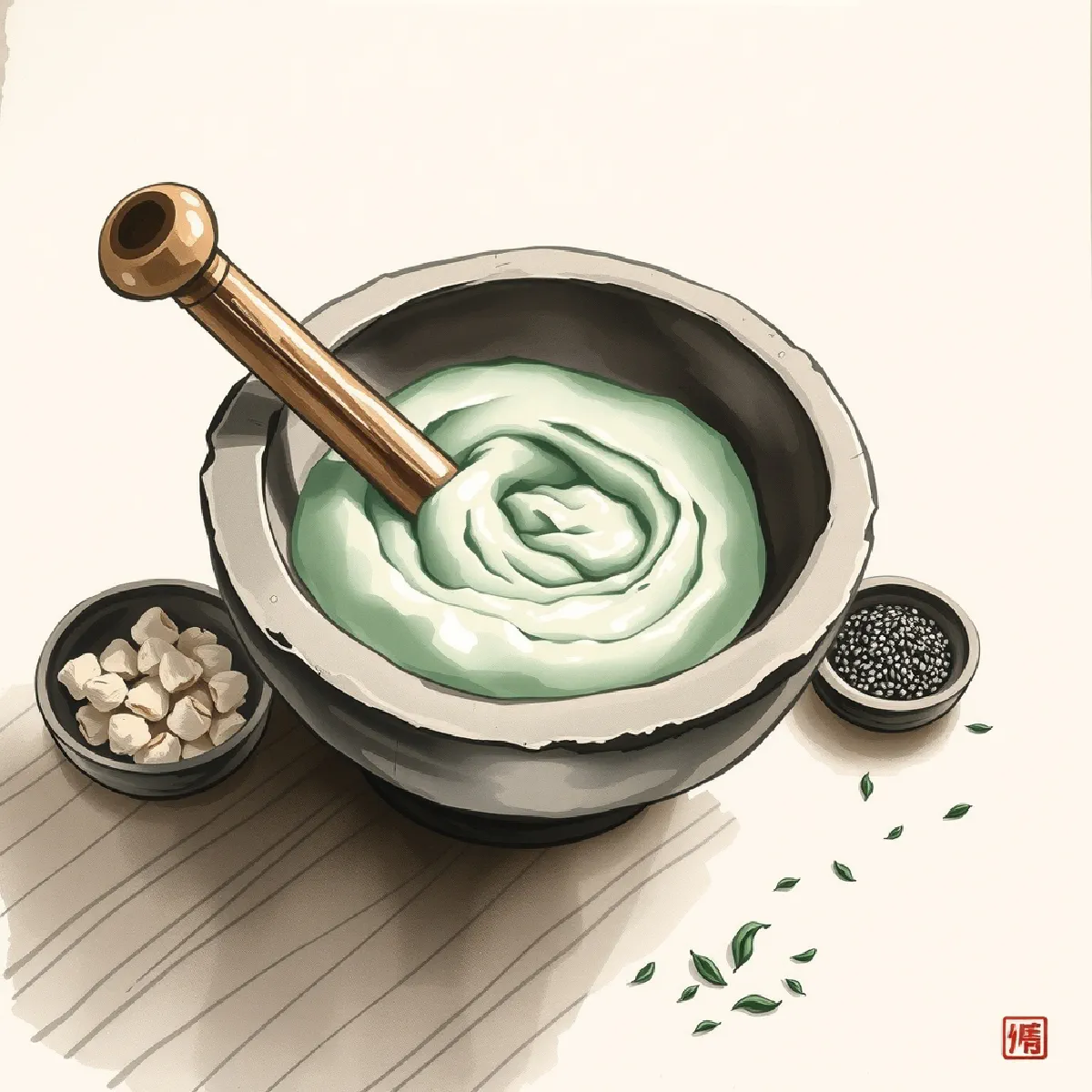
The tool matters as much as the recipe. The traditional mortar is a wide, rough clay bowl scored with grooves radiating from the center. The pestle is a long stick, classically guava wood, worked in a steady clockwise motion. Grinding a batch by hand takes 10 to 15 minutes of real effort. Historically that was women’s work in Hakka households, and it was how guests were welcomed.
Two Very Different Bowls
Lei cha today splits into two styles that share a name and not much else. Knowing which one you are ordering, or making, avoids surprises.
| Beipu style (Taiwan) | Thunder tea rice (Malaysia / Singapore) | |
|---|---|---|
| Base | Green tea, sesame, peanuts, pumpkin seeds, pine nuts, brown rice or Job’s tears | Green tea, peanuts, sesame, plus fresh basil, mint, coriander, sometimes mugwort |
| Flavor | Nutty, toasty, mildly sweet | Herbal, savory, salted |
| Served with | Puffed rice, sometimes red beans, dates, goji, tapioca pearls in syrup | A bowl of rice topped with chopped stir-fried greens, long beans, preserved radish, fried tofu, peanuts, dried shrimp |
| Eaten as | Afternoon snack or light meal | Full lunch |
Beipu, a Hakka town in Hsinchu County, turned its household staple into a tourist experience in the late 1980s and 1990s. Visitors grind their own paste at the table, drink a cup plain first to taste the layers, then stir in puffed rice. The old street now has dozens of lei cha shops, each with a slightly different blend.
The Southeast Asian version is what most people mean by “thunder tea rice.” The paste is dominated by fresh herbs, so the soup is bright green and tastes closer to an Asian pesto than to a cup of tea. You drench the rice and toppings in it and eat everything together.
Making the Savory Version at Home
You do not need a clay mortar. A blender or food processor does in seconds what the pestle does in a quarter hour. The thing you cannot skip is roasting the nuts and seeds first.
The paste (serves 4 to 6)
| Ingredient | Amount | Notes |
|---|---|---|
| Fresh basil leaves | 50 g | Thai or sweet basil both work |
| Fresh coriander leaves | 50 g | Stems are fine |
| Fresh mint leaves | 20 g | |
| Mugwort leaves | 10 g | Optional, adds a bitter, medicinal edge |
| Roasted peanuts | 80 g | Dry-roast raw peanuts 10 to 15 minutes until pale brown |
| Sesame seeds | 1 Tbsp | Toast until golden |
| Green tea leaves | 1 Tbsp | Loose leaf |
| Salt | ½ tsp | Adjust to taste |
- Blend everything into a smooth paste, adding a splash of water if it will not turn over.
- Per serving, whisk 2 to 3 tablespoons of paste into 3 to 4 tablespoons of just-boiled water. Let it stand 15 minutes so the flavors bloom, then thin with more hot water to the consistency you like.
- Portion cooked rice into deep bowls. Arrange the toppings in neat piles: garlic-fried choy sum and mustard greens, blanched long beans, soaked and drained preserved radish, cubes of pan-fried firm tofu, roasted peanuts, and dried shrimp if you want it.
- Pour the hot tea soup over everything just before eating.
Leftover paste freezes well in single portions for up to six months.
Which Tea to Use
The traditional base is green tea, and it is the right starting point. A plain, inexpensive Chinese green such as a mid-grade Longjing or any everyday “green tea” from a Chinese grocer is ideal. Do not use your best spring picking; the herbs and nuts will bury its nuances.
A few things to know before you improvise:
- Keep the tea proportion honest. Some modern blends pile on twenty or thirty ingredients until the tea disappears. If you want it to taste like tea, keep tea to roughly a third of the dry mix.
- Oolong works but reads bitter. A roasted oolong such as Wuyi Shuixian gives a toasty, deeper cup, especially in the sweet Beipu style. Lightly oxidized greener oolongs tend to turn harsh when ground.
- Dark and red teas are fair game. Shu pu-erh and Dianhong both stand up to nuts and sesame if you prefer a warmer, less grassy bowl.
- Grind the tea with the nuts, not separately. Oils from the peanuts and sesame coat the tea powder and keep the paste from tasting dusty.
The Practical Takeaway
Lei cha is the cheapest way to experience tea as food rather than drink, and it makes a genuinely satisfying vegetarian lunch. If you visit Taiwan, book a grinding session in Beipu. At home, start with the savory paste above using whatever green tea you already own, and keep a bag of puffed rice around in case you want to try the sweet Beipu bowl next.