Tea Pantry Staples: Building Your Tea Cuisine Kitchen
Why a Tea Pantry?
Tea cuisine sits at a beautiful crossroads: it’s not a separate culinary tradition so much as a way of thinking about flavor. The same leaves you’d brew for a morning cup can become a braising broth, a steaming bed, a marinade base, or a fragrant smoke source. But to cook this way comfortably, you need a pantry that’s set up for it.
This guide is for the home cook who wants to reach for tea as naturally as they’d reach for soy sauce or stock. No rare ingredients, no fussy tools — just the essentials that make tea-cooking feel effortless.
The Tea Shelf: Five Leaves You’ll Reach For Again and Again
You don’t need twenty varieties of tea to cook well. These five cover every major tea-cooking technique from braising and smoking to steaming and infusing.
Keemun Black (祁门红茶)
The workhorse of tea cuisine. Keemun has a rich, winey, slightly smoky character that holds up beautifully against soy sauce, star anise, and slow braising. It’s the tea behind classic tea eggs, tea-smoked duck, and braised meats. If you only buy one cooking tea, make it this one.
Use it for: braising, tea eggs, marinades, stocks.
Jasmine Green Tea (茉莉花茶)
Delicate, floral, and fragrant. Jasmine green tea shines in lighter dishes — steamed fish, poached chicken, broth-based soups, and cold-infused sauces. The floral notes pair wonderfully with ginger, scallion, and light soy. Don’t boil it aggressively; steep gently and use the liquid as a finishing broth.
Use it for: steaming, poaching, light broths, marinades for seafood and poultry.
Pu-erh (普洱茶)
Pu-erh brings earthy, deep, almost mushroom-like notes that mimic the complexity of aged ingredients. It’s exceptional in red-braised (红烧) dishes, mushroom broths, and any recipe where you want umami depth without heaviness. Both raw (生) and ripe (熟) pu-erh work, though ripe pu-erh is more forgiving for cooking.
Use it for: braised meats, mushroom stocks, vegetarian broths, marinades.
Oolong (乌龙茶)
Oolong occupies the middle ground — not as assertive as black tea, not as delicate as green. Its complex, slightly roasted character works in stir-fries, fried rice, and noodle dishes. Tieguanyin (铁观音) is a favorite for lighter cooking, while darker roasted oolongs stand up to richer sauces.
Use it for: stir-fries, fried rice, noodle broths, steamed buns.
Lapsang Souchong (正山小种)
This is your secret weapon. Lapsang Souchong is dried over pinewood fires, giving it an intense smoky aroma that’s utterly distinctive. A pinch goes a long way. Use it to add a campfire note to braised pork, to create a smoke infusion without a wok, or to lend depth to barbecue-style marinades. Be sparing — it’s powerful stuff.
Use it for: smoking, braised pork, barbecue marinades, stocks that need a smoky backbone.
The Pantry: Shelf-Stable Companions
These are the ingredients you’ll reach for alongside your tea — they form the supporting cast in nearly every tea-cuisine dish.
The Essentials
- Rock sugar (冰糖) — Slow-melting, clean sweetness that rounds out braising liquids without the harshness of white sugar. Indispensable for red-braised dishes.
- Light soy sauce (生抽) — The salt-and-umami backbone of most marinades and braises. Use a good-quality brand like Pearl River Bridge or Lee Kum Kee.
- Dark soy sauce (老抽) — Thicker, sweeter, and darker. Used sparingly for color and depth, not for salt. A teaspoon transforms the color of a braising liquid.
- Shaoxing wine (绍兴酒) — A cooking wine with nutty, savory depth. Essential for deglazing, marinades, and braises. If you can’t find it, dry sherry is an acceptable substitute.
- Sesame oil (麻油) — Used as a finishing oil, not for cooking. A drizzle at the end of a stir-fry or over steamed fish adds a toasty fragrance that pairs beautifully with green teas.
- Star anise (八角) — One or two pods in a tea braise create that unmistakable licorice-warm note. Always remove before serving.
- Cinnamon (肉桂) — Cassia cinnamon, specifically. Warmer and spicier than Ceylon cinnamon, it’s the right partner for black tea braises.
- Dried tangerine peel (陈皮) — Aged citrus peel that adds a subtle, complex fragrance. A small piece in a pu-erh braise is transformative.
Nice to Have
- White pepper (白胡椒粉) — Lighter and more floral than black pepper. Use in light broths and seafood dishes with jasmine tea.
- Sichuan peppercorn (花椒) — Not for everyone, but a few in a braising liquid add a gentle floral numbness that plays well with oolong.
- Dried shiitake mushrooms (香菇) — Soak and use the soaking liquid as part of your tea broth base. The mushroom and tea umami combine beautifully.
The Equipment: What You Actually Need
You don’t need a special tea-cooking kitchen. These few items will get you through 90% of tea cuisine recipes.
Must-Haves
- A wok with a tight-fitting lid — For braising, smoking, and stir-frying. A carbon steel wok is ideal. The lid is crucial for tea-smoking — you need to trap the smoke inside.
- Cheesecloth or muslin — For making tea sachets. Loose tea leaves in a braise are a pain to strain out. Bundle them in cheesecloth, steep, and remove cleanly. You can also use disposable tea bags or a tea infuser basket.
- A bamboo steamer — For steaming fish, dumplings, and buns over tea-infused water. Stackable bamboo steamers fit inside most woks.
- A steaming rack or trivet — A small metal rack that sits in the bottom of your wok, keeping food above the tea liquid during smoking or steaming.
Nice-to-Haves
- A small spray bottle — For tea-smoking. Spray the tea leaves with a little water so they smolder rather than burn when you heat the wok.
- Heavy-bottomed clay pot (砂锅) — Great for slow braises where you want even, gentle heat. Perfect for pu-erh or Keemun braises.
- Mortar and pestle — For lightly crushing spices and tea leaves. Especially useful for dry rubs and smoking blends.
How to Store Tea for Cooking
Here’s a rule that will save you both money and disappointment: keep cooking tea separate from drinking tea.
Cooking tea should be:
- Affordable — Don’t use your aged gushu pu-erh or first-flush Darjeeling in a braise. You won’t taste the nuance, and it’s a waste of good leaf.
- Bulk-stored — Buy medium-quality tea specifically for the kitchen. A 200g bag of Keemun from a Chinese grocery store will last you months.
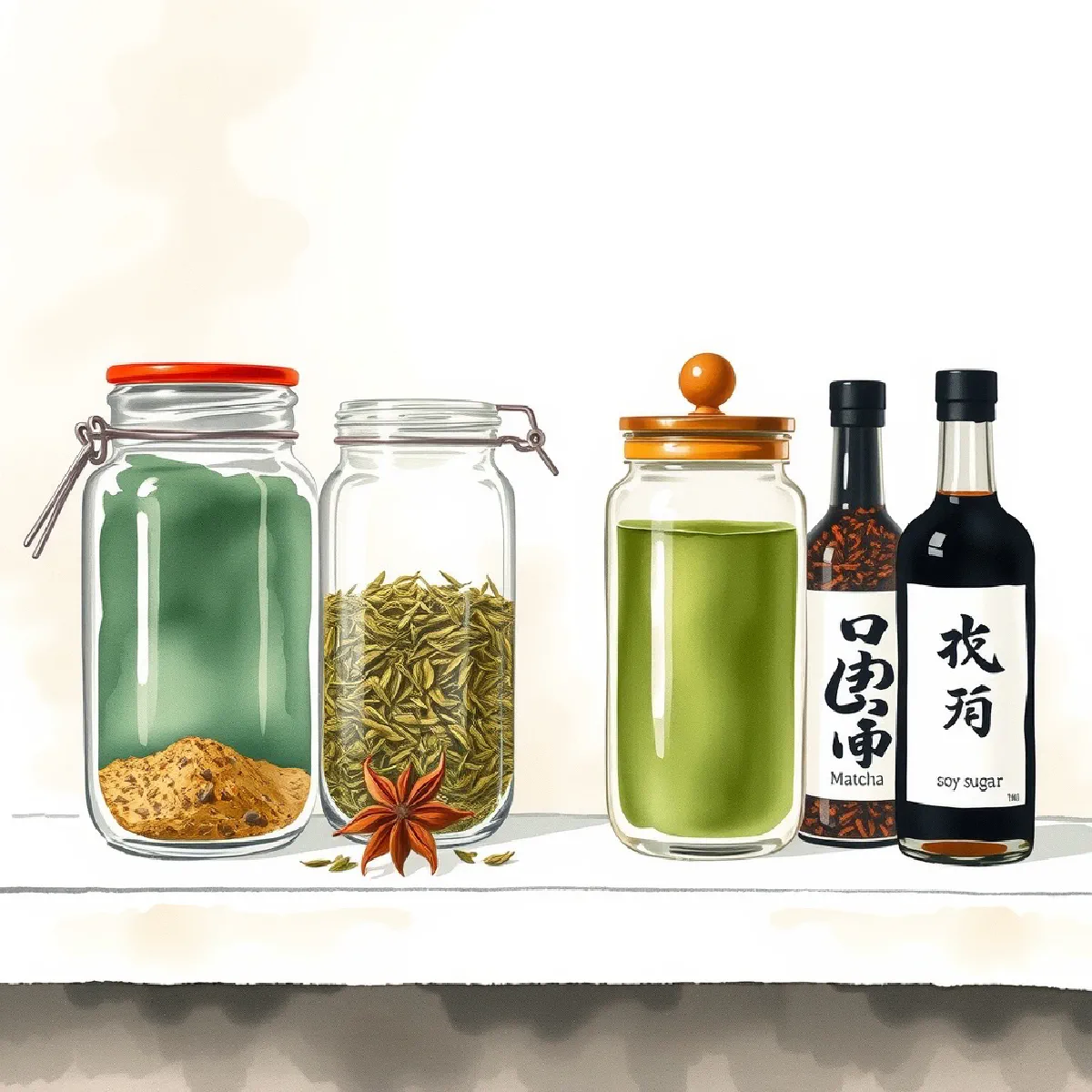
- In an airtight jar — Same as drinking tea: keep it away from light, heat, moisture, and strong odors. A simple glass jar or tin in a dark cabinet is fine.
Pro tip: If you visit a tea shop, ask if they sell “broken leaf” or “fannings” grades — these are cheaper, brew faster, and are perfect for cooking. Tea-scented pu-erh minis sold for brewing travel are also great compact options for the kitchen.
The Minimum Starter Kit
If you’re building this pantry from scratch, here’s what to buy first. This is enough to make at least a dozen classic tea-cuisine dishes.
| Category | Item |
|---|---|
| Tea | Keemun black tea (100g) |
| Tea | Jasmine green tea (50g) |
| Pantry | Light soy sauce, Shaoxing wine, rock sugar, star anise |
| Pantry | Dried tangerine peel (a small bag) |
| Equipment | Cheesecloth, wok with lid, bamboo steamer |
Total cost: roughly ¥100–150/$15–20 at a Chinese grocery, and everything except the tea and tangerine peel will last many meals.
From this starting point, you can make tea eggs, tea-smoked chicken, longjing shrimp, braised pork belly, steamed fish, and tea-infused rice. When you’re comfortable, add pu-erh and Lapsang Souchong to expand into richer braises and smoked dishes.
Don’t Throw Away Used Tea Leaves
Used tea leaves are still useful. Here are a few ways to get a second life out of them:
- Rinse and dry them, then scatter in the bottom of a smoker or wok before smoking tofu, chicken, or eggplant. The leaves still have enough fragrance to contribute.
- Add spent leaves to a pot of rice as it cooks — they lend a faint tea aroma and a subtle green tint to the grains. Works best with jasmine or oolong.
- Toss them into compost — tea leaves are nitrogen-rich and excellent for soil.
- Use as a gentle pan scrub — the tannins help cut grease and the texture works as a mild abrasive. (This one’s old-school but genuinely effective.)
The only leaves you shouldn’t re-use: any that were steeped with strong spices like star anise or cinnamon, as those flavors carry through and can overwhelm a second dish.
A Final Note
A tea pantry isn’t about collecting niche ingredients. It’s about having the right few things on hand so that when a recipe calls for it, reaching for tea is as natural as reaching for salt. Start with the five teas and the core pantry. Learn how Keemun behaves in a braise. Try jasmine in a simple steamed fish. Once you’re comfortable, the combinations are endless — and they all start from this one shelf.
Happy cooking — and brewing.