Aged White Tea (老白茶): What Changes, What Fakes It, and How to Brew It
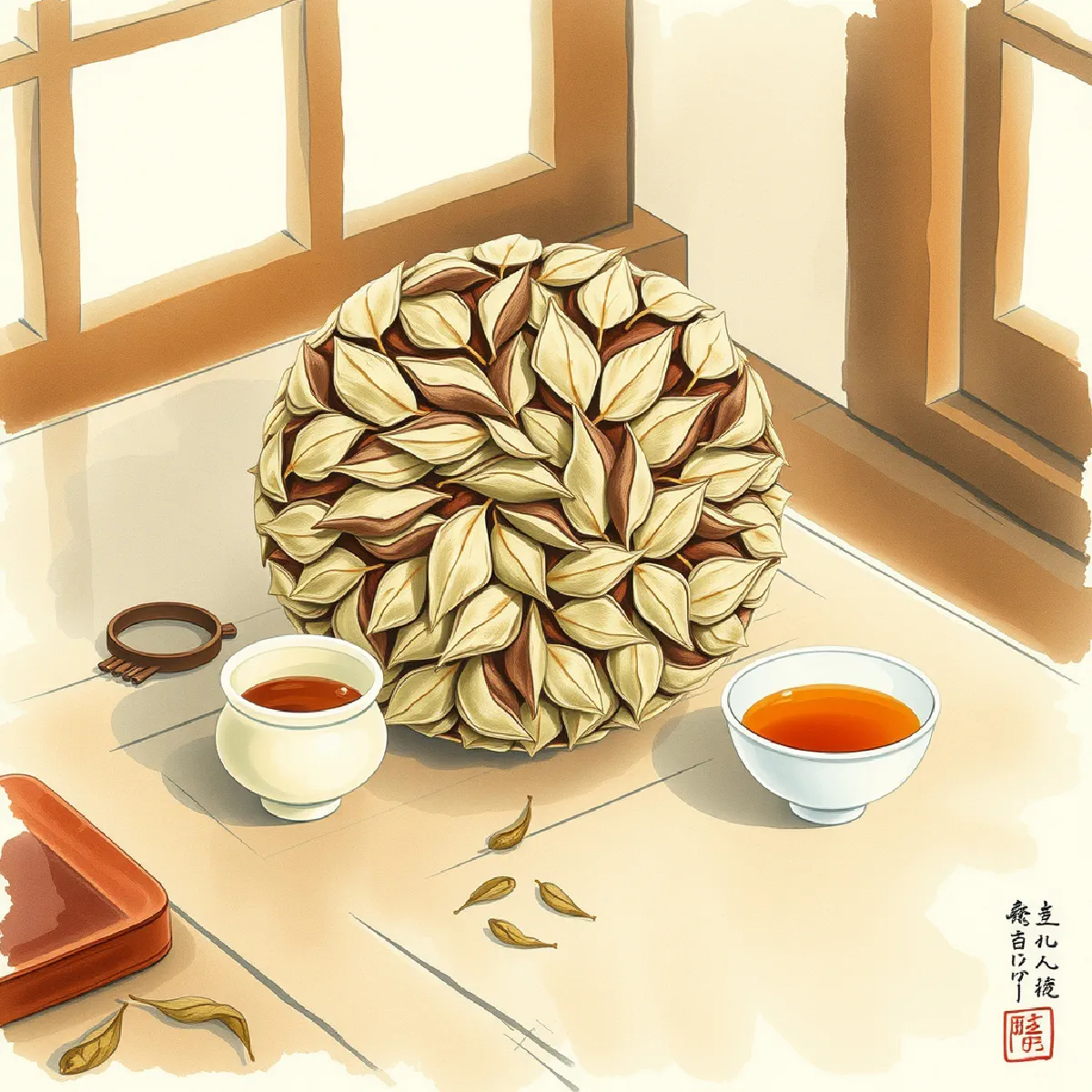
The Only Chinese Tea Sold Twice
White tea is the simplest tea in China to make — wither, dry, done — and one of the strangest to buy, because the same leaf is sold as two different products. Young, it is a pale, hay-sweet, delicate thing you drink within the year. Kept five or ten years, it turns tawny, thick and faintly medicinal, and costs several times as much.
Fujian has a saying for it: 一年茶,三年药,七年宝 — “one year tea, three years medicine, seven years treasure.” It is folk shorthand, not a grading rule, but it tracks what actually happens in the jar well enough to be useful.
What Actually Changes
Nothing is added to white tea as it ages. What changes is the slow oxidation of compounds that were never fully deactivated, because white tea is never pan-fired or rolled. Polyphenols and catechins break down and recombine; the grassy top notes go first, and heavier sugars, dried-fruit and woody notes arrive later.
The practical result is a flavor timeline most vendors describe the same way:
| Age | What you get | Worth buying? |
|---|---|---|
| 0–1 year | Hay, melon, light florals, bright and thin | Yes — but drink it as fresh tea, not as an investment |
| 1–3 years | The awkward phase: florals have faded, depth hasn’t landed | Cheapest time to buy if you plan to store it yourself |
| 3–7 years | Honey, dried apricot, herbs, noticeably rounder body | The value sweet spot for most drinkers |
| 7+ years | Dates, wood, warm spice, a smooth almost broth-like sweetness | Good, and priced like it |
That middle dip is real and worth knowing about. A two-year-old cake that tastes flat is not a bad tea; it is a tea caught between two selves.
Not All White Tea Ages Equally
The grade you choose matters more than the year on the wrapper.
- Shou Mei (寿眉) is the aging workhorse. Mature leaves and stems carry proportionally more of the compounds that transform, so it changes the most and costs the least. Most of the aged white tea worth drinking started here.
- Gong Mei (贡眉) sits just above it and ages on the same logic — a reasonable step up.
- Bai Mudan (白牡丹) ages into something more refined, with more florality surviving into year five.
- Baihao Yinzhen (白毫银针) ages perfectly well, but all-bud tea is expensive enough fresh that cellaring it is a costly bet.
Pressed cakes aren’t inherently better than loose leaf — they age more slowly and more evenly, because less of the leaf touches air. Loose Shou Mei moves faster and takes far more shelf space. Cakes also travel and store better, which is most of why they exist.
How Fakes Are Made — and Spotted
Aged white tea sells on a number printed on a wrapper, which makes it an obvious target. The usual counterfeit is 做旧 (“made old”): leaf that has been wet-piled or heat-baked to force the color of age in weeks instead of years.
What gives it away:
- Color uniformity. Real aged white tea is mottled — greens, browns, tawny and maroon all in one handful. A cake that is evenly dark brown or near-black all over is the single loudest warning sign.
- How the liquor arrives. Genuine aged tea releases slowly: the first infusion is light amber, deepening steadily over several steeps. Forced tea comes out dark and murky on infusion one and fades fast.
- Aroma. Age smells of jujube, dried herbs and old wood. Forced age smells muddled — sour, burnt, or faintly moldy.
- The spent leaves. Open the gaiwan after brewing. Naturally aged leaf still shows variation and some flex; wet-piled leaf comes out uniformly dark brown and brittle.
- The price. A genuine ten-year Shou Mei cake costs real money. A cheap one is a cheap young one with a good story.
Buy from sellers who state production year, origin and storage region, and treat a dramatic wrapper backstory as marketing rather than evidence.
Storing It Yourself
The most common mistake is to store white tea like pu-erh. It isn’t pu-erh. Pu-erh wants humidity and airflow; white tea wants dry and sealed, because its transformation is oxidation, not microbial fermentation. Damp storage gives you mold, not age.
- Dry. Roughly 50–60% relative humidity, and below 25°C. China’s white tea standard caps moisture at 8.5% at packing, which tells you how dry this leaf is meant to stay.
- Sealed, not vacuum-packed. Food-grade kraft or foil bag inside a tin or ceramic jar is the standard setup.
- Dark, cool, odor-free. No kitchen shelves, no spice cupboards.
- Leave it alone. Opening the jar weekly to check on it is the fastest way to stall the whole project.
Buy a two- or three-year cake at the bottom of the price dip, store it properly, and you get seven-year tea in four years for the price of young tea. That is the only genuinely cheap way into this category.
Brewing: Push It Harder Than You Think
Everything you learned about treating white tea gently applies to fresh white tea. Aged white tea is the opposite: it wants heat and time, and under-brewing it is the usual reason a good cake tastes like nothing.
| Method | Leaf : water | Temperature | Timing |
|---|---|---|---|
| Gongfu | 5 g per 100 ml | Full boil (100°C) | Quick rinse, then ~10 s, adding a few seconds per steep |
| Western | 3–4 g per 300 ml | 95–100°C | 2–3 minutes, 3–4 infusions |
| Boiled (煮茶) | ~5 g per 500 ml | Bring to boil | Simmer 5 minutes, then serve |
Use boiling water. Aged white tea has already oxidized; it is far harder to scorch than a fresh silver needle, and 80°C water simply leaves most of it in the leaf. If a tea does come out harsh, drop to 90°C and climb back up over later infusions.
Boiling deserves a specific mention, because it is how this tea is most often drunk in Fujian in winter and it produces something gongfu brewing never quite reaches — thicker, sweeter, more date-like. The usual move is to brew a cake gongfu style for six or eight infusions, then tip the spent leaves into a pot of water and simmer them for a final, richer round.
Where to Start
If you have never had it: buy a 5–8 year Shou Mei cake from a vendor who states the year, and brew it boiling. It is the cheapest honest introduction to what aging does, it tolerates brewing mistakes better than almost any tea, and it will tell you quickly whether the category is for you.
If it is, buy a young cake at the same time and start your own clock.