Reading the Leaf Bottom (叶底): What Spent Leaves Tell You
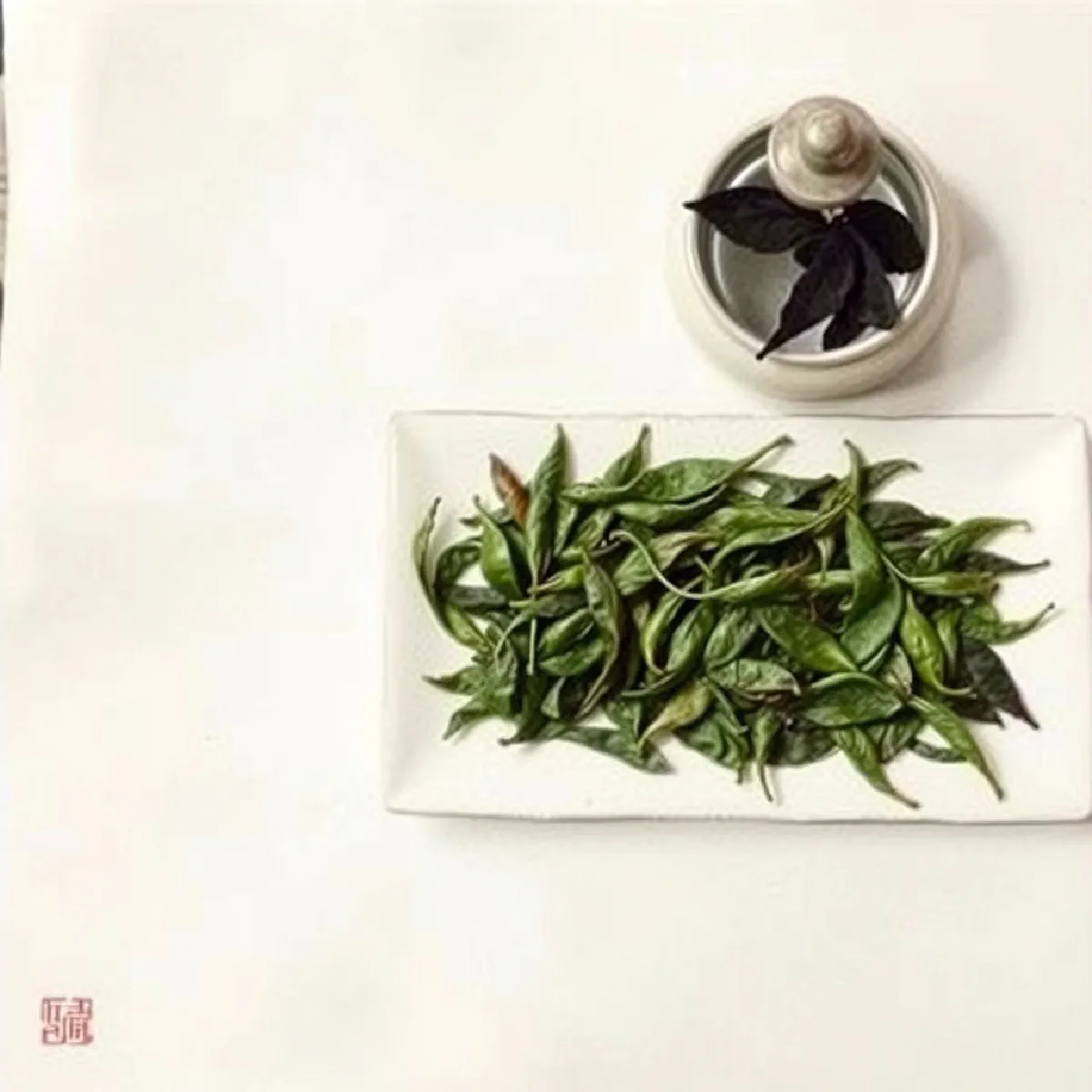
The Step Everyone Skips
You finish the last infusion, and the leaves go in the compost. That’s a shame, because the wet leaf — ye di (叶底), “leaf bottom” — is the only part of the session that can’t lie to you.
Dry leaf can be sorted, polished, and photographed flatteringly. Liquor color can be pushed around by how long you steeped. But once the leaf is fully open and swollen with water, you’re looking at the raw material and the processing, plainly. It shows what was picked and how it was handled, after the marketing has worn off.
This is not a fringe hobby. In the Chinese national method for sensory evaluation, tea is scored on five factors — dry appearance, liquor color, aroma, taste, and leaf bottom — and the leaf bottom carries roughly ten percent of the score on its own. Professional tasters look at it every single time.
How to Actually Look
The whole procedure takes two minutes and needs nothing you don’t own.
- Wait until the leaves are done opening. Judging after one infusion tells you very little; gongfu leaves often need three or four steeps to fully unfurl.
- Spread them on something pale. The inside of your gaiwan lid, a white saucer, a small plate. Professional tasting rooms use a white porcelain tray for exactly this reason — color reads honestly only against white.
- Flatten a few out. Unfold two or three leaves completely with your fingers or a spoon. If they’re curled into knots, a little cold water in the tray helps them relax open.
- Press one. Good leaf is supple and springs back. Sit with it a moment before you judge.
Doing this right after brewing, while the leaves are still warm, also lets you smell them — many faults announce themselves in the wet-leaf aroma before you see anything.
The Four Things You’re Judging
| What to look at | Good sign | Warning sign |
|---|---|---|
| Evenness | Leaves of similar size, maturity, and color | A jumble of sizes and shades — blended lots, careless sorting |
| Integrity | Mostly whole leaves, still attached to stems | Shreds and fragments; mush that falls apart |
| Color | Bright and alive, whatever the hue | Dull, muddy, greyish, or blotchy |
| Texture | Soft but elastic; springs back when pressed | Limp and slimy, or brittle and papery |
Evenness is the one most people underrate. Uniform leaf means the picking standard was actually enforced and the lot wasn’t padded with cheaper material. Mixed maturity in the wet leaf is the single most reliable tell of a blended-down tea, and no amount of pretty dry leaf hides it.
Integrity matters because broken leaf brews differently — more surface area, faster extraction, more bitterness from the same parameters. Heavy breakage also points toward machine harvesting and rough handling.
Brightness is worth separating from color. Two green teas can both be green, but one glows and the other looks flat and tired. Dull, dead color in a green or a light oolong usually means the tea has been sitting too long, or was stored badly and has begun to oxidize in the bag.
Tender Is Not the Same as Better
Here’s where beginners go wrong. Tenderness is a real criterion — the bud-to-leaf ratio and softness of the leaf are part of how grades are assigned — but it only matters relative to what the tea is supposed to be.
A Bi Luo Chun or a Silver Needle should give you tiny, tender, downy buds. If the wet leaf is full of thick mature leaves, you didn’t get what you paid for.
A Wuyi rock oolong or a Dong Ding should give you big, thick, leathery leaves. That’s deliberate: those styles need mature leaf to survive their processing and carry roast. Thick, sturdy wet leaves there are a good sign, not a flaw. Judging a rock oolong by bud standards will lead you to reject exactly the right tea.
Ask “is this leaf appropriate for the style,” never “is this leaf young.”
What Different Teas Should Look Like
- Green tea — bright, lively green; even and tender. Yellowed or dull olive leaves mean age or heat damage. Reddish-brown edges mean the leaf was bruised before firing, a processing fault.
- Oolong (strip and rolled) — the classic marker is lü ye hong xiang bian (绿叶红镶边), “green leaf, red edge”: a green center with a distinct reddish rim, created when the leaf edges are bruised during zuo qing and oxidize inward. A clean, consistent red edge across the leaves is a sign of skilled processing. Heavily roasted oolongs show browner leaf overall, and the pattern gets harder to read.
- Red tea — uniform coppery-brown, bright rather than dark. Patches of green mean uneven oxidation.
- White tea — buds still plump and covered in down; stems and leaves both present is normal for Shou Mei and not a defect.
- Aged pu-erh — supple, dark brown, and still intact. Leaf that disintegrates into mud when rubbed generally means over-fermentation or damp storage.
Reading It Back Into Your Brewing
The leaf bottom also grades you, not just the tea.
Leaves that are still tightly closed after several infusions mean your water was too cool or your steeps too short — you left flavor in the pot. Leaves that went limp, dark, and lifeless after two steeps usually mean water that was too hot for a delicate green. And if you brewed a tea you liked and the wet leaf looks wrong for the style, the problem may be that you brewed it for the wrong style entirely.
Spend two minutes on the spent leaves after your next session. It costs nothing, and after a dozen teas you’ll be able to spot a padded lot before you finish the second cup.