Reading a Pu-erh Wrapper (棉纸): Recipe Numbers, Nei Fei, and What the Paper Proves
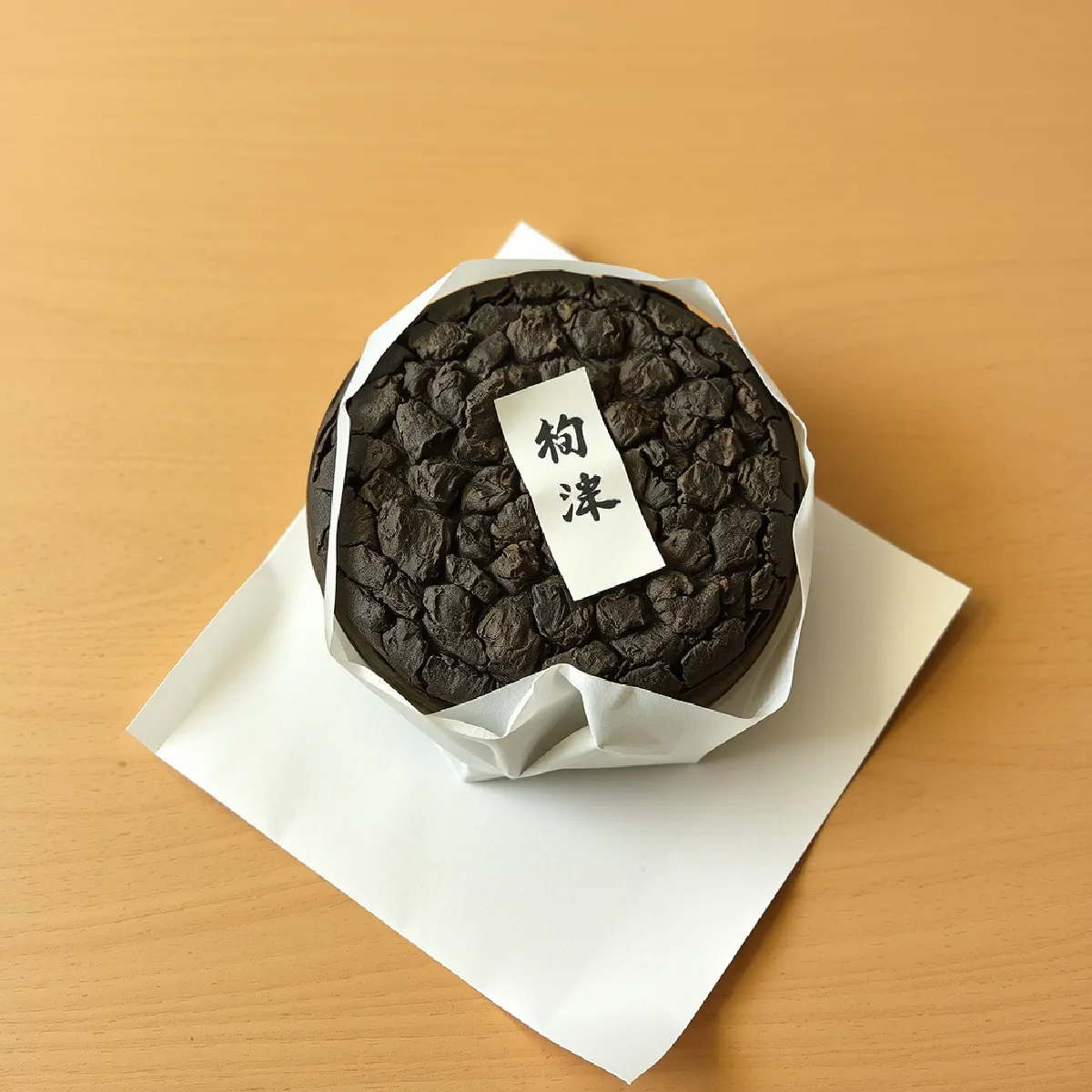
A Cake Is Sold Twice
Every other tea you buy arrives in a bag. Pu-erh arrives wrapped in a sheet of printed cotton paper, and that paper carries more claims than any tea listing you will ever read: a factory, a year, a mountain, a four-digit code, sometimes a batch number. It looks like documentation. Much of it is marketing.
The useful skill is not memorizing famous wrappers. It is knowing which fields on the paper are structured facts you can decode, which are free text anyone can print, and which pieces of the package a counterfeiter has to bother faking.
The Three Pieces of Paper
A standard cake ships with three documents, and they are not interchangeable.
| Piece | Chinese | Where it lives | What it is |
|---|---|---|---|
| Wrapper | 棉纸 / 包装纸 | Outside, folded around the cake | Factory, year, region, cultivar, recipe number, artwork |
| Nei fei | 内飞 | Pressed into the cake face | Small ticket with factory and brand, physically embedded during pressing |
| Nei piao | 内票 | Loose under the wrapper | Larger leaflet describing the tea and the factory |
The nei fei matters most, because it is the only one bound to the tea itself. A wrapper can be swapped around any cake of the right size; a loose nei piao can be reprinted by the thousand. A nei fei has to survive the press, which is why it is the first thing experienced buyers look at — and the detail fakes most often get wrong.
Decoding the Four-Digit Recipe Number
The famous codes — 7542, 7572, 8653 — are not product IDs or years of production. They are blend recipes, and each digit says something.
| Digits | Meaning | Example: 7542 |
|---|---|---|
| First two | Year the recipe was created | 1975 |
| Third | Average leaf size grade, 0–9 | 4 — on the smaller side |
| Fourth | Factory code | 2 — Menghai (Dayi) |
Factory codes you will meet: 1 Kunming, 2 Menghai (Dayi), 3 Xiaguan.
Two traps follow from this.
The first two digits are not the harvest year. A 7542 pressed last spring is still a 7542. The recipe dates to 1975; the tea in your hands may be fifty years younger. The actual production year is printed elsewhere on the wrapper, or encoded in a batch number.
The leaf-grade digit is not a quality rating. It describes leaf size, where 9 is largest and 0 smallest. Bigger is not worse and smaller is not better — big leaves bring body and sweetness over long aging, small ones bring aroma and sharpness. A 7542 is not “worse” than a 7582.
Batch numbers follow a separate three-digit convention on Dayi and similar factory cakes: a 2009 cake marked 901 is the first production run of 2009 — year digit, then run number.
What the Wrapper Does Not Guarantee
Free-text fields on the paper carry no verification whatsoever. “Ancient tree,” “Lao Ban Zhang,” “wild arbor,” “spring picking” — anyone with a printer can put those on cotton paper, and at the prices real Lao Ban Zhang material commands, plenty of people do.
A recipe number from a non-official producer is also just a number. A small workshop can press a cake and call it 7542; it has no connection to Menghai’s blend. Treat the code as meaningful only when the factory on the wrapper is the factory the code points to.
Checking the Package Before You Trust It
If you are buying a cake that trades on its label — an older factory production, anything with resale value — the package is worth five minutes.
- Feel the paper. Genuine wrappers use thicker, coarser cotton paper with visible fiber. Fakes often run on thin, smooth, almost plastic-feeling stock.
- Look at print quality. Counterfeits commonly lose a color, blur fine lines, or show photocopy-grade edges on the nei fei.
- Check how the nei fei sits. It should be pressed into the leaf and partly visible. A ticket buried so deep you cannot read it, or stuck on the surface with rounded corners, is a flag.
- Compare against a reference. For well-known productions, vendors and forums publish side-by-side photos of real and fake batches of the exact year and batch number. Use them.
For everyday drinking cakes bought from a vendor you trust, skip all of this. Nobody counterfeits a $25 cake.
The Honest Summary
The wrapper tells you reliably: which factory, which recipe, which year, which run. It tells you nothing reliable about the garden, the trees, or the picking standard unless the vendor independently stands behind those claims.
That is why provenance in pu-erh ends up resting on the shop rather than the paper. Buy from sellers who source traceably and describe their material plainly, and the wrapper becomes what it should be — a label, not an affidavit.
For the rest of the buying picture, see How to Read a Chinese Tea Listing . Once the cake is home, Breaking a Pu-erh Cake covers getting into it without wrecking the leaf.