How to Read a Chinese Tea Listing (网上买茶指南)
The Problem With Buying Tea You Cannot Smell
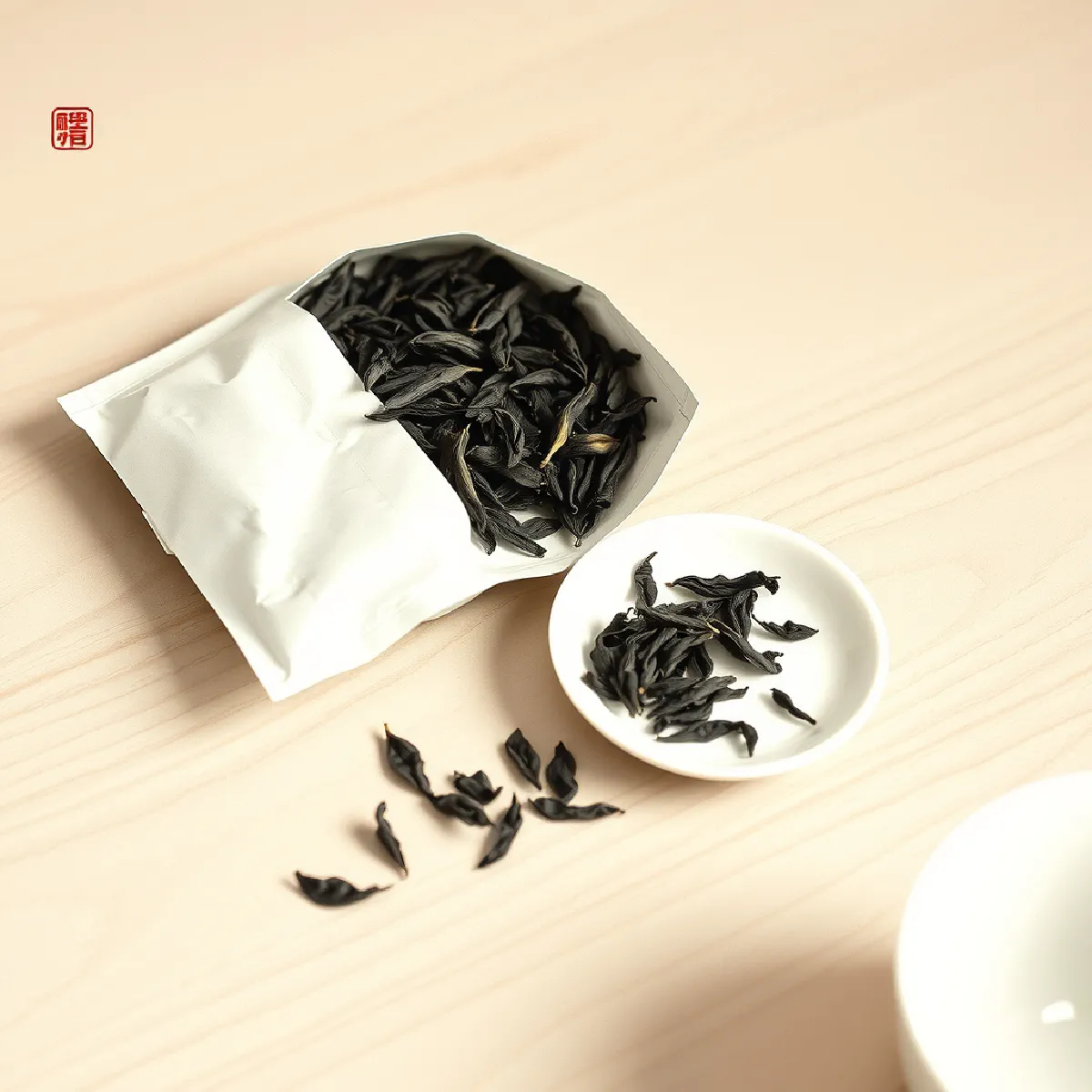
In a shop you pick up the tin, smell the leaf, and know something within three seconds. Online you get a photograph, a paragraph of romance, and a price. Almost everything that actually determines whether the tea is good is either buried in that paragraph or missing from it entirely.
The good news is that the specialty vendors worth your money tend to disclose the same handful of facts, and the ones to avoid tend to omit the same handful. Once you know which fields to look for, a listing becomes surprisingly easy to read.
The Five Fields That Matter
Scan a product page for these before you look at the tasting notes.
| Field | What good looks like | Warning sign |
|---|---|---|
| Harvest date | “Spring 2026,” or better, a specific picking window | No date at all, or “fresh stock” |
| Origin | Village, mountain, or garden — “Weng Jia Shan, Fenghuang” | “China,” “Fujian Province,” “high mountain” |
| Cultivar | Named bush — Shui Xian, Qi Dan, Wu Niu Zao | Silent, on a tea where cultivar drives the flavor |
| Processing | Roast level, oxidation, wither method, finishing | Adjectives only |
| Sample size | 10–25 g option available | Minimum purchase is 100 g or a full cake |
A vendor who publishes origin at village level and harvest by season is telling you they know their supply chain. One who writes “premium grade Chinese green tea, rich in antioxidants” is telling you they bought it from a wholesaler.
Harvest Dates: What Ming Qian Actually Promises
Spring green tea listings lean heavily on two terms, and both are dates, not grades.
- Ming Qian (明前) — picked before the Qingming festival, which falls on April 4–6. A short window, small yields, very tender buds, and some of the highest prices in the tea world.
- Yu Qian (雨前) — picked between Qingming and Gu Yu (谷雨, Grain Rain, April 20). Slightly more developed leaf, fuller body, considerably more affordable.
Here is the part most listings will not tell you: Ming Qian is only meaningful in some regions. The Qingming cutoff evolved around the green tea areas of Zhejiang and Jiangsu. In warm Yunnan and Sichuan, Qingming marks the end of the good picking. In cooler Anhui and Jiangxi, the bushes have barely budded by then — a “Ming Qian” tea from a cold, high garden may be thinner than one picked two weeks later. Early-budding modern clones like Wu Niu Zao also push out leaf well before Qingming regardless of quality, which makes the label easy to earn and easy to abuse.
Treat Ming Qian as a flavor profile (delicate, sweet, light-bodied) rather than a quality certificate. And note that all early spring green tea rewards drinking within a few months, not saving for a special occasion.
Grades: Which Ones Are Real
Chinese tea has no single national grading standard covering all types, which is why the terminology on listings is such a mess.
Standardized (GB/T national standards). Green, red, and yellow teas use Special Grade (特级), then First, Second, Third Grade, judged on leaf uniformity, aroma, liquor clarity, taste, and the spent leaf. These are meaningful, if coarse.
Structural, and therefore reliable. White tea grades describe which part of the plant was picked: Yin Zhen (buds only) → Bai Mudan (bud plus one or two leaves) → Gong Mei and Shou Mei (more mature leaf). This tells you exactly what is in the bag. Worth knowing that the lower grades, with more mature leaf, generally age better.
Traditional but unregulated. Zheng Yan (正岩) for Wuyi rock oolong from the true rock core, qing xiang versus nong xiang for Tieguanyin roast level, gu shu (古树) for ancient-tree pu-erh, lao cong for old bushes. These carry real meaning among people who know the material — and nobody audits them.
Invented. “AAAA,” “S+++++,” “Imperial Reserve,” “royal grade.” A vendor stacking letters is a vendor with no standard to cite.
A Buying Method That Works
- Sample before you commit. Buy 10–25 g of three or four candidates instead of 100 g of one. A $30 sampler that teaches you what you actually like beats a $30 bag you tolerate for a year.
- Buy one category at a time. Drink four Wuyi oolongs side by side and the differences become obvious. Drink one of each of six categories and you learn almost nothing.
- Sanity-check the price. Genuinely cheap famous-name tea is not a bargain, it is a different tea wearing the name. Real Ming Qian Longjing or Zheng Yan yancha cannot be produced at commodity prices.
- Judge the leaf, not the copy. When it arrives, look at the dry leaf: whole and intact or broken and dusty, consistent in size and color or a jumble of grades blended together. Smell it dry. Then brew it. That tells you more than any product description.
- Keep notes and re-order. A vendor whose spring 2026 Longjing was excellent is your best predictor of their spring 2027 Longjing. Loyalty to a good vendor is cheaper than endless searching.
Shipping and Timing
Spring green teas reach Western vendors from roughly May through July, which is when to buy them. Buying “2026 Longjing” in February 2027 means buying a tea that has spent nine months losing its best quality.
The opposite applies to aged categories. Pu-erh, Liu Bao, and older white teas have no urgency — for those, storage history matters far more than purchase date, and a vendor who can say where a cake has been stored is worth more than one selling last week’s arrival.
For a starting list of shops that publish this kind of detail, see our Popular US Shops page.