Enshi Yulu (Jade Dew - 恩施玉露)
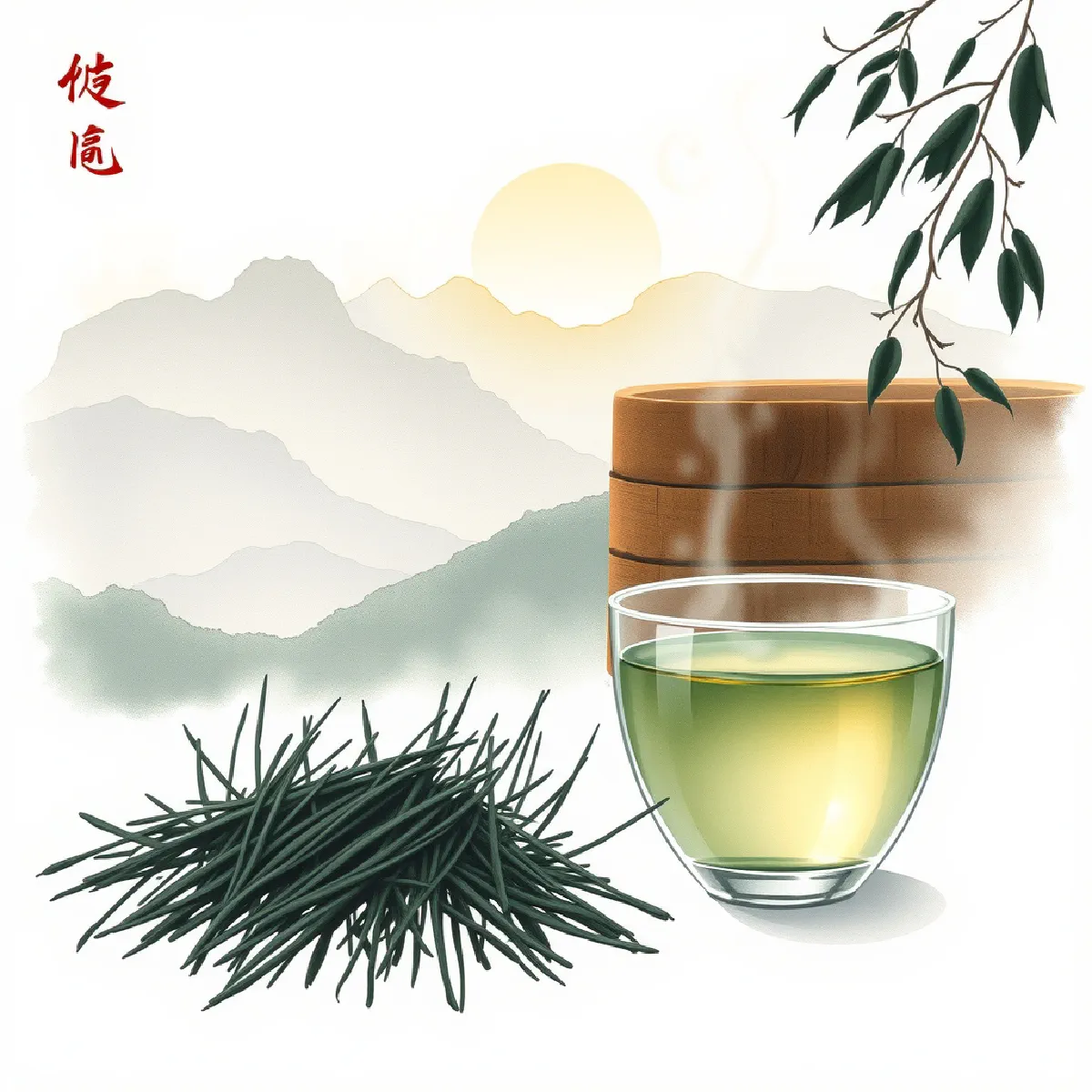
The One Chinese Green Tea That Is Steamed
Almost every famous Chinese green tea is pan-fired: the fresh leaf hits a hot wok, and the heat of the metal kills the enzymes that would otherwise oxidize it. Enshi Yulu is the exception. It is the only major Chinese green tea still made by steaming the leaf — the method described in Lu Yu’s Classic of Tea, which China largely abandoned in favor of the wok centuries ago, and which Japan kept and built sencha on.
That single processing difference is the whole reason to buy it. If you already drink Longjing or Biluochun and want to feel how much of a green tea’s character comes from the kill-green step rather than the garden, this is the cleanest experiment available.
Where It Comes From
Enshi Yulu is made in the Wufeng mountains outside Enshi City, in the Tujia and Miao Autonomous Prefecture of western Hubei province.
Two things about the region matter in the cup:
- Selenium-rich soil. Enshi is sometimes called China’s “selenium capital” — the area sits on an unusually concentrated selenium deposit, and Enshi teas are marketed on that basis. Take the health claims with a grain of salt; what drinkers consistently report is a soft, rounded sweetness rather than anything dramatic.
- Mist and altitude. Like most mountain green tea gardens, the near-constant cloud cover slows growth and shifts the leaf toward amino acids over polyphenols — more umami, less bite.
Historically the area (then Shizhou) was already sending tribute tea to the Tang court. The name Yulu — “jade dew” — dates to the Ming and Qing eras and describes the liquor. The craft nearly died out in the 1970s and was revived in the early 1980s by a handful of remaining families. It was added to China’s national intangible cultural heritage list in 2014, and was among the Chinese tea-processing traditions inscribed by UNESCO in 2022.
How It Is Made
- Picking — early spring, one bud with one tender leaf.
- Steaming (蒸青) — the leaf is steamed for a matter of seconds at around 100°C. This is the step that defines the tea.
- Cooling and rolling — repeated rolling and shaping into fine, straight needles.
- Drying — low heat until the leaf takes on a silky, dark-jade sheen.
The traditional benchmark is the “three greens” (三绿): green dry leaf, green liquor, green aroma. Pan-firing tends to push a green tea toward toasted, chestnut, or beany notes; steaming preserves the raw-leaf character instead, which is why Enshi Yulu reads darker and more savory than its wok-fired cousins.
Enshi Yulu vs. Japanese Sencha
Both are steamed, but they are not the same drink. Enshi Yulu is steamed comparatively lightly and then rolled into a distinct needle, so it lands somewhere between a Chinese green and a sencha.
| Enshi Yulu | Japanese Sencha | |
|---|---|---|
| Steaming | Light, brief | Longer (and deeper still for fukamushi) |
| Dry leaf | Straight, tight, dark-jade needles | Flatter, more fractured, often finer |
| Aroma | Nori, butter, toasted rice, faint flowers | Grassy, vegetal, steamed-vegetable |
| Liquor | Clear green-gold, thick and viscous | Often cloudy, brighter green |
| Flavor | Umami with creamy sweetness, cool finish | Sharper vegetal edge — edamame, sweet corn, asparagus |
If sencha has ever struck you as too sharp, Enshi Yulu is the gentler version of the same idea.
Buying: What to Look For
- Needles, not fragments. Quality Enshi Yulu is uniformly straight and tight. A lot of broken leaf and dust means either low grade or careless handling.
- Dark jade, with sheen. Steamed leaf is darker than pan-fired green tea — don’t mistake that for staleness. What you want is a glossy, even color, not dull olive or yellow.
- Harvest date on the label. This is a fresh-drinking green tea. Buy the current spring’s harvest (pre-Guyu, mid-April, is the usual quality marker) and finish it within the year.
- Aroma before purchase. Nori and butter is right. Musty, or flatly hay-like, is not.
- Where: Teavivre, Eastern Leaves, and One River Tea all carry it from named Enshi producers with harvest dates — the minimum standard for any spring green tea.
Brewing
Sources disagree on temperature more than usual for this tea, and the reason is the steaming: too hot and the delicate umami goes bitter fast. Start cool and work up.
| Method | Leaf | Water | Temperature | Steeps |
|---|---|---|---|---|
| Gongfu (gaiwan) | 3 g / 150 ml | filtered, soft | 70–80°C | 60 s first, +15 s per round, 4–5 infusions |
| Western (mug) | 2.5 g / 250 ml | filtered, soft | 80–85°C | 2–3 min, re-steep twice |
Two rules that matter more than the exact numbers: never use boiling water, and don’t over-steep. Above about 85°C, or past three minutes in a mug, the savory thickness collapses into astringency. The second infusion is usually the sweetest — don’t stop at one.
A glass is worth using at least once, if only to watch the needles sink and the liquor come up green-gold. After that, a gaiwan will get more out of the leaf.