Jasmine Tea (茉莉花茶)
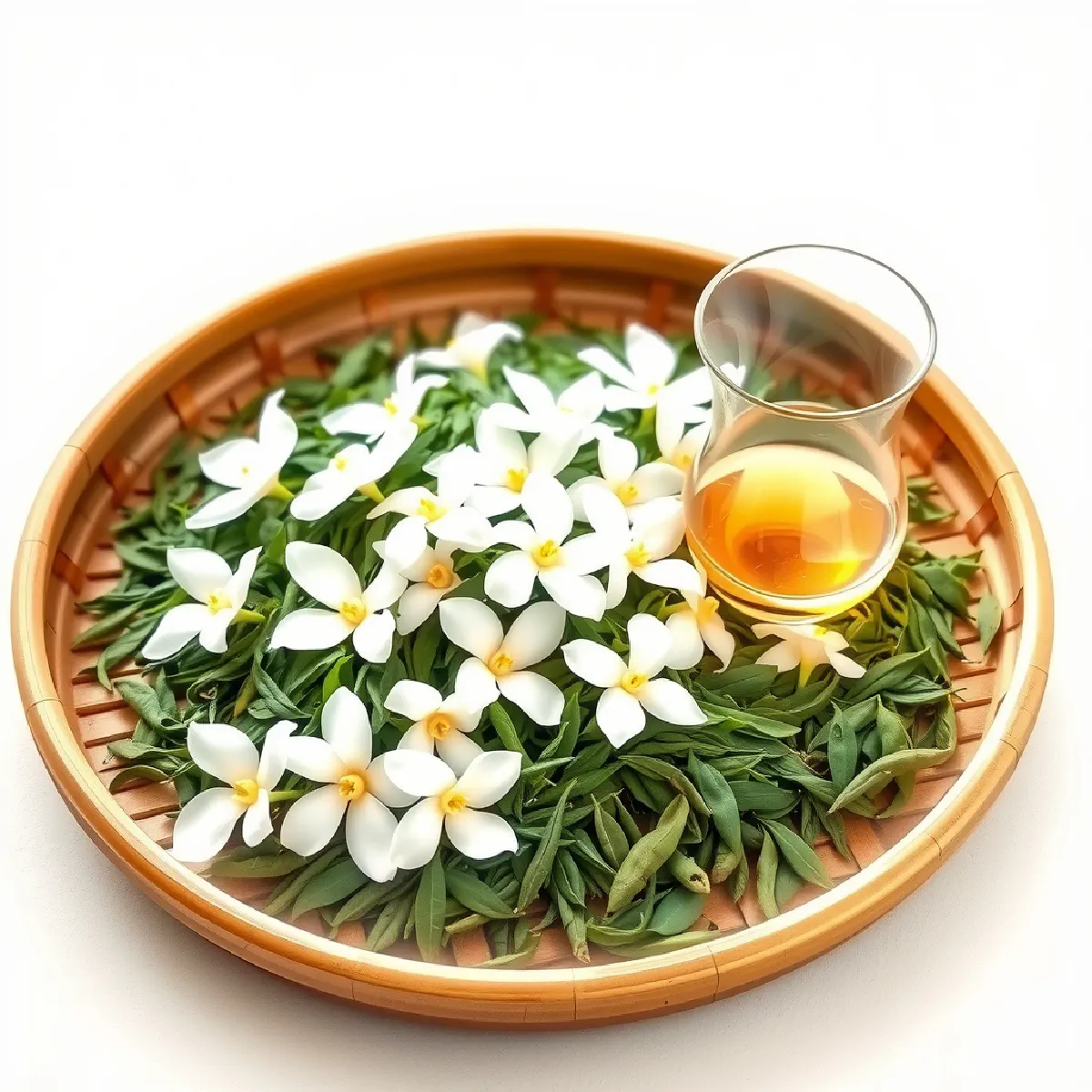
The Scented Tea Everyone Knows (and Underestimates)
Jasmine tea is often the first Chinese tea people ever taste — poured free at dim sum, bagged in supermarkets, flavoring everything from lattes to candy. That ubiquity hides something remarkable: real jasmine tea (茉莉花茶, moli hua cha) is one of China’s most labor-intensive teas, and the gap between a cheap jasmine-flavored bag and a well-made Fuzhou jasmine tea is as wide as any in the tea world.
Jasmine flowers arrived in China from Persia along ancient trade routes, and records of scenting tea with jasmine go back to the Song Dynasty (960–1279). The craft matured in Fuzhou, the capital of Fujian province, whose warm basin climate suits both tea bushes and jasmine fields. Fuzhou’s jasmine tea scenting technique is today recognized on China’s national intangible cultural heritage list.
How It’s Made: Scenting, Not Flavoring
Good jasmine tea contains no oils, extracts, or “natural flavors.” The aroma gets into the leaf through scenting (窨制, yinzhi) — a slow transfer of fragrance from fresh blossoms to finished tea.
The process is a race against the flower’s own clock:
- The base tea is made in spring. Most jasmine tea starts as a green tea, often with visible downy buds. The spring tea is finished and then stored until jasmine season.
- Flowers are picked on summer days, still closed. Jasmine buds are harvested before they open and kept cool until evening.
- Scenting happens at night. Jasmine blooms after dark, which is when its fragrance peaks. Workers layer tea and fresh blossoms — roughly one part flowers to a few parts tea — and let the leaf absorb the aroma for hours.
- Spent flowers are sifted out, and the tea is re-dried. One round is called a yin (窨). Everyday grades get 2–3 rounds; premium teas are scented up to nine times, each round with a fresh batch of flowers.
This is why good jasmine tea is expensive: every scenting round consumes a new flower harvest and another night of labor. And it’s why a handful of dried petals in the bag tells you little — the fragrance lives in the leaf, not the flowers.
Common Styles
| Style | What it is | What to expect |
|---|---|---|
| Jasmine Yin Hao (茉莉银毫) | Loose leaf with silvery buds, classic Fuzhou style | Full-bodied, layered floral aroma; the benchmark |
| Jasmine Dragon Pearls (茉莉龙珠) | Bud-heavy leaf hand-rolled into small pearls, then scented | Sweet, rounded, very forgiving to brew; unfurling pearls are fun to watch |
| Jasmine white / black tea | Silver Needle or black tea base instead of green | Softer (white) or maltier (black) take on the same fragrance |
| Jasmine “flavored” tea | Tea sprayed with jasmine flavoring | Loud but flat aroma that fades after one steep; skip it |
Brewing: Keep It Cool
Most jasmine tea is green tea underneath, so treat it like one — boiling water scalds the leaf and turns the florals harsh.
| Parameter | Western style | Gongfu style |
|---|---|---|
| Water temperature | 175–185°F (80–85°C) | 175–185°F (80–85°C) |
| Leaf amount | 2–3 g per 240 ml (8 oz) cup | 4–5 g per 120 ml gaiwan |
| First steep | 2–3 minutes | 15–20 seconds (pearls: 45–60 s) |
| Later steeps | 1–2 infusions total | +5–10 seconds each round, 5+ infusions |
If a cup turns bitter, your water was too hot or the steep too long — good jasmine tea rebrews sweetly for many rounds. A glass cup or porcelain gaiwan shows off the liquor and, with pearls, the slow unfurling of the leaves.
Buying Guide: Separating Craft from Perfume
- Look for the scenting count. Vendors proud of their process say so: “six times scented” (六窨) or “nine times scented” (九窨) signals traditional production. No mention of scenting at all is a yellow flag.
- Fuzhou / Fujian origin is the classic pedigree, the same way Longjing points to Hangzhou.
- Check the ingredient list. “Green tea, jasmine flowers” is what you want. “Natural jasmine flavor” means sprayed, not scented.
- Smell for depth, not volume. Real scenting gives a cool, fresh floral note woven into the tea’s own sweetness. Flavored tea smells intense in the bag, then vanishes in the second steep.
- Petals are decoration. A few are harmless, but a tea that relies on visible flowers for its looks (or aroma) is usually hiding a plain base leaf.
Start with dragon pearls if you’re new — they’re the most forgiving — then graduate to a well-made Yin Hao to taste what nine nights of flowers can do to a spring green tea.