Zhangping Shuixian (漳平水仙): The Oolong That Comes in Squares
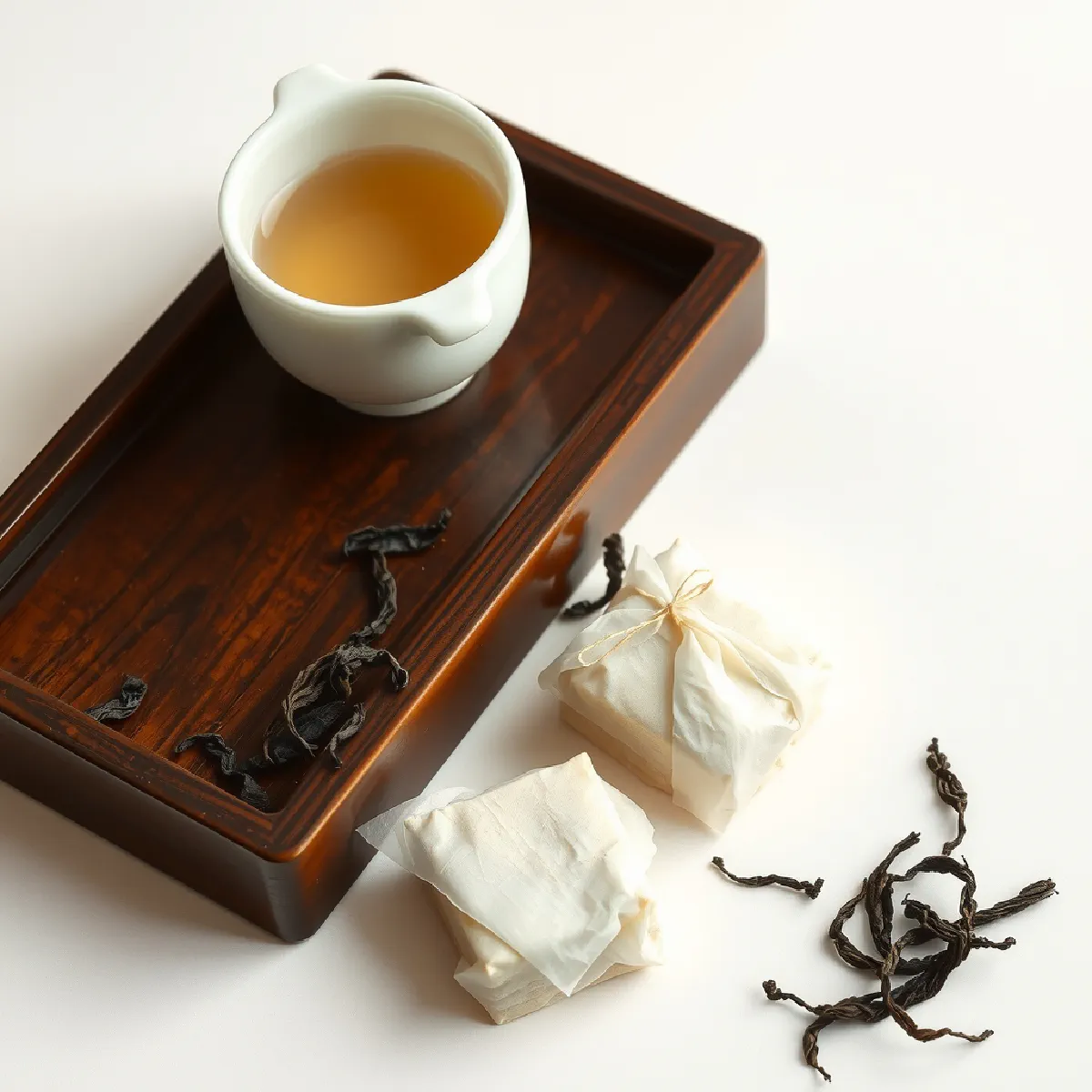
One Cultivar, Two Completely Different Teas
If you have had Shuixian before, you have probably had the Wuyi version: a dark, roasted rock oolong, loose twisted leaves, famous for thick texture. Zhangping Shuixian is the same cultivar grown 300 kilometers south, processed a different way, and pressed into little paper-wrapped squares.
It is the only compressed tea in the entire oolong category. Every other pressed tea you can name — pu-erh cakes, Liu Bao baskets, Anhua bricks — is a dark tea. This one is an oolong, and it behaves like one.
Where the Squares Came From
Zhangping sits in Longyan, in southern Fujian. The cultivar is not native there. In the early 1900s a villager named Liu Yongfa brought Shuixian seedlings south from the Jianyang area in northern Fujian — Wuyi country — and planted them at home.
The problem was storage. Shuixian leaves are large, loose, and bulky, and in the humid south they picked up moisture and went stale fast. The fix, worked out around 1914, was mechanical: press the rolled leaves into a small wooden mould lined with paper, then dry the cake in the mould. The paper stays on. That is why the tea was known for decades simply as “paper-wrapped tea” (纸包茶).
The processing itself is a hybrid, which is the genuinely unusual part. Zhangping borrows the withering and oxidation habits of southern Fujian oolongs like Tieguanyin, then finishes with the baking discipline of the north. In 2022 the technique was included in China’s national intangible cultural heritage listing for traditional tea processing, which UNESCO inscribed the same year.
What You Actually Get
| Zhangping Shuixian | Wuyi Shuixian | |
|---|---|---|
| Form | Square cake, ~5 cm × 1 cm, 8–12 g, paper-wrapped | Loose twisted leaf |
| Region | Zhangping, southern Fujian | Wuyi Mountains, northern Fujian |
| Oxidation | Light | Medium |
| Roast | Light bake, or charcoal for darker styles | Medium to heavy |
| Liquor | Pale gold, clear | Amber to deep orange |
| Signature | Orchid florals, creamy sweetness | Thick body, mineral “rock rhyme” |
The dominant note is orchid — clean, high, and sweeter than you expect from a roasted oolong. Good ones have a slippery, almost creamy mouthfeel and a long finish. Charcoal-roasted versions trade some of that floral lift for toast and stone fruit, and they age better.
A single cake is usually around 10 grams, which is a convenient accident: it is roughly one gongfu session, pre-measured, with no scale needed.
How to Brew It
The cake is the complication. It is pressed firmly, and if you drop it in whole it will sit there releasing almost nothing for two steeps, then dump everything at once on the third.
Gongfu — the method it was built for:
- Unwrap the cake and drop it in a 100–120 ml gaiwan whole. Do not break it up.
- Water just off boiling, 95–100 °C.
- Rinse for 10 seconds and discard. This is not optional here — the rinse is what loosens the press so the leaves can open.
- First three infusions: about 15 seconds each. Then add 10 seconds per round.
- Expect eight or more steeps. The cake visibly unfurls across the session; by steep four it has usually fallen apart into loose leaf.
Western mug: break off a quarter to half a cake (roughly 2.5 g) into 250 ml at 90 °C for 3–4 minutes. Lower temperature and less leaf, because you have no rinse to soften the compression. Two or three steeps.
Use porcelain. A gaiwan lets you watch the cake open, which is genuinely useful for judging when to stop timing short.
Buying Notes
This is an inexpensive tea that is hard to find rather than hard to afford — most Western shops skip it entirely because it does not fit the usual oolong shelf.
What to look for in a listing: the cake weight, the harvest season (spring is the one to want), and the roast style stated plainly as light bake or charcoal. Old-tree (老欉) Zhangping from bushes 50 years and up costs more and tastes deeper, with more body under the florals.
What to be wary of: cakes sold loose without their paper, which usually means repackaging and lost freshness, and anything marketed as “oolong pu-erh” or sold on the promise of aging like a sheng cake. Lightly roasted Zhangping is a fresh tea. Drink it within a year or two. Only the heavier charcoal styles reward keeping.
Zhangping Shuixian is the easiest way to taste how much processing — not cultivar, not terroir — decides what a tea becomes. Brew it beside a Wuyi Shuixian sometime. Same plant, same name, and you would never guess they were related.