Bailin Gongfu (Bai Lin Gong Fu - 白琳工夫)
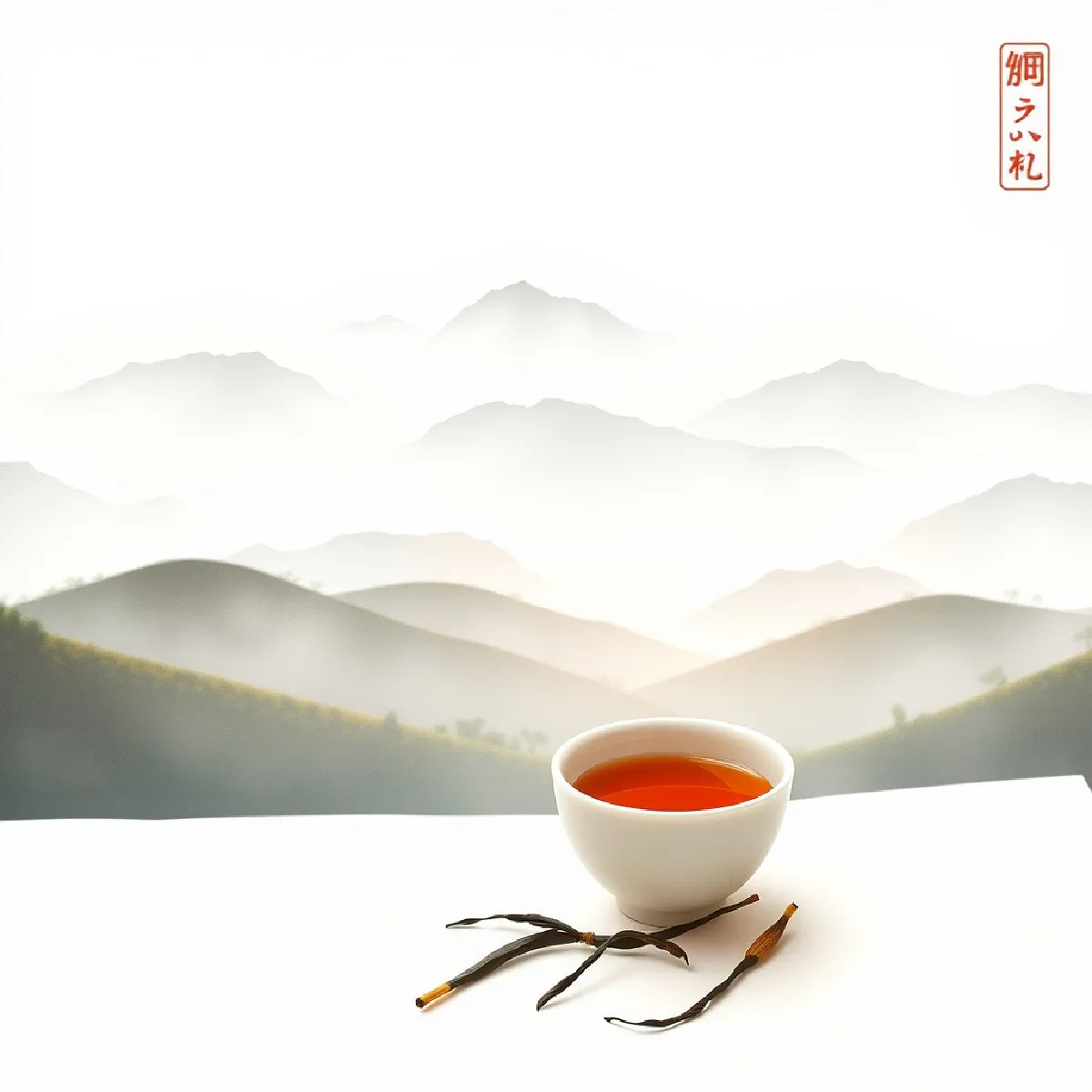
The Red Tea Made From a White Tea Plant
Here is the detail that makes this tea worth knowing: Bailin Gongfu is made from the same cultivar as Silver Needle.
It comes from Bailin Town in Fuding, Fujian, at the foot of Mount Taimu — the heartland of Chinese white tea. The plant is Fuding Da Bai (福鼎大白, “Fuding Big White”), sometimes alongside its sibling Da Hao (大毫), the same downy, bud-heavy cultivar that becomes Baihao Yinzhen and Bai Mudan. Instead of being withered and dried into white tea, the leaf is rolled and fully oxidized into a red tea.
That substitution explains almost everything about how it tastes: a red tea with white tea’s bones — golden downy tips, sweetness that arrives early, and very little of the tannic grip most people expect from a “black” tea.
Production dates to roughly 1850, when Fujian makers were adapting Wuyi red-tea technique for the export trade.
Where It Sits: The Third Minhong
Fujian’s three classic gongfu red teas are known together as Minhong (闽红). We have covered Tanyang Gongfu already; Bailin is its Fuding cousin.
| Tea | Region | Cultivar | Character |
|---|---|---|---|
| Tanyang Gongfu (坦洋工夫) | Fu’an | Tanyang Caicha, Jin Mudan | The benchmark. Brisk, sweet, clean high aroma |
| Zhenghe Gongfu (政和工夫) | Zhenghe | Zhenghe Da Bai | Roundest, longest body of the three |
| Bailin Gongfu (白琳工夫) | Fuding | Fuding Da Bai / Da Hao | Most tippy and floral; thick, soft, honeyed |
One honest caveat before you shop: these regional distinctions have blurred. Producers trade techniques and plant each other’s cultivars, so today the difference between two bags often comes down to the individual farm rather than the town on the label. Treat the table as a starting expectation, not a guarantee.
A Note on “Golden Monkey”
Bailin Gongfu is often sold in English as Golden Monkey (金猴, Jin Hou). That name describes a style — a Fujian red plucked to bud-and-first-leaf so the dry leaf is shot through with golden tips — not a protected origin, and it now gets applied to Yunnan reds too. A bag marked “Golden Monkey” may be Bailin Gongfu, or may not. Look for Fuding (福鼎) on the listing.
How It’s Made
Classic gongfu red processing, with one trait good producers emphasize — restraint. The leaf withers in shade on bamboo trays, then gets rolled gently, because over-rolling strips off the silver down you are paying for. Oxidation happens in bamboo baskets under damp cotton cloth in a humidity-controlled room, and the maker stops it at a specific moment: when the leaf turns bright coppery red and throws a clear fruity aroma. Push past that and the tea goes flat and sour. A final drying sets the aroma.
That basket-and-cloth method is the traditional signature, and it is slower than the trough systems used for volume production.
What It Tastes Like
Expect lychee and dried longan up front, a honeyed malt underneath, and a finish that is sweet and long rather than brisk. The liquor runs reddish-amber with golden lights — noticeably brighter than a Qimen or a Dianhong.
The defining quality is texture. Bailin is thick and almost syrupy in the mouth with close to no astringency, which makes it one of the easiest Chinese red teas to hand a beginner. Compared with Zhenghe it is more floral and a touch shorter on the finish; compared with Tanyang it is softer and less brisk.
How to Judge a Good One
| Feature | Good | Avoid |
|---|---|---|
| Dry leaf | Plenty of golden tips with visible silver down; twisted strands, even length | Uniformly dark leaf with no tips; crumbs and dust |
| Aroma | Lychee, longan, honey, warm malt | Sour, scorched, or papery |
| Liquor | Bright reddish-amber, clear, golden at the rim | Dull brown, cloudy, or murky |
| Taste | Thick and sweet, low astringency, long honeyed finish | Sharp or drying; thin and watery |
| Wet leaf | Even coppery red, supple, intact bud-and-leaf sets | Patchy green-and-black, blackened edges, shredded |
Patchy wet leaf is the useful tell. Even oxidation is the hard part of this tea, and it is the first thing to go in a cheap lot.
Brewing: Keep It Under Boiling
Downy bud material scorches. Boiling water strips the lychee aroma and replaces it with a dry edge, so stay below it.
Western / mug method
- 3 g per 200–250 ml, 85–90°C / 185–195°F, 3 minutes
- Good for three or four steeps, adding a little time each round
Gongfu / gaiwan method
- 5 g in a 100 ml gaiwan, 90°C / 195°F
- Quick rinse, then roughly 20s, 25s, 30s, 40s, 50s, 70s
- Five to seven solid infusions; the honey note peaks around steep three
Drink it plain. The sweetness is the entire point, and it is far too delicate to survive milk.
Buying Notes
- Look for Fuding (福鼎) on the origin line. “Fujian black tea” or a bare “Golden Monkey” tells you nothing.
- Judge the tips by eye. A proper Bailin shows golden, downy buds in the listing photo. Uniformly black dry leaf means a lesser grade or a different tea.
- Check the harvest year. Red tea keeps better than green, but the floral top note fades within a year or two.
- Buy small first. Farm-level variation now outweighs regional style, so a 25 g sample beats any tasting note.
Specialty vendors carrying Minhong reds include Yunnan Sourcing, Teavivre, and Jing Tea Shop; offerings rotate by season, so compare current listings rather than assuming last year’s lot is back.
Bailin Gongfu is the gentlest of the three Minhong reds and the one with the clearest story: take the plant that made Chinese white tea famous, oxidize it fully, and you get a cup that is unmistakably red tea yet soft in a way only a bud-heavy white cultivar manages.
Sources: Tea Guardian — Minhong Gongfu , Chacodex — Bai Lin Gong Fu , Wufeng Tea — The Processing of Bai Lin Gong Fu , Wikipedia — Golden Monkey tea