Tanyang Gongfu (Panyang Congou - 坦洋工夫)
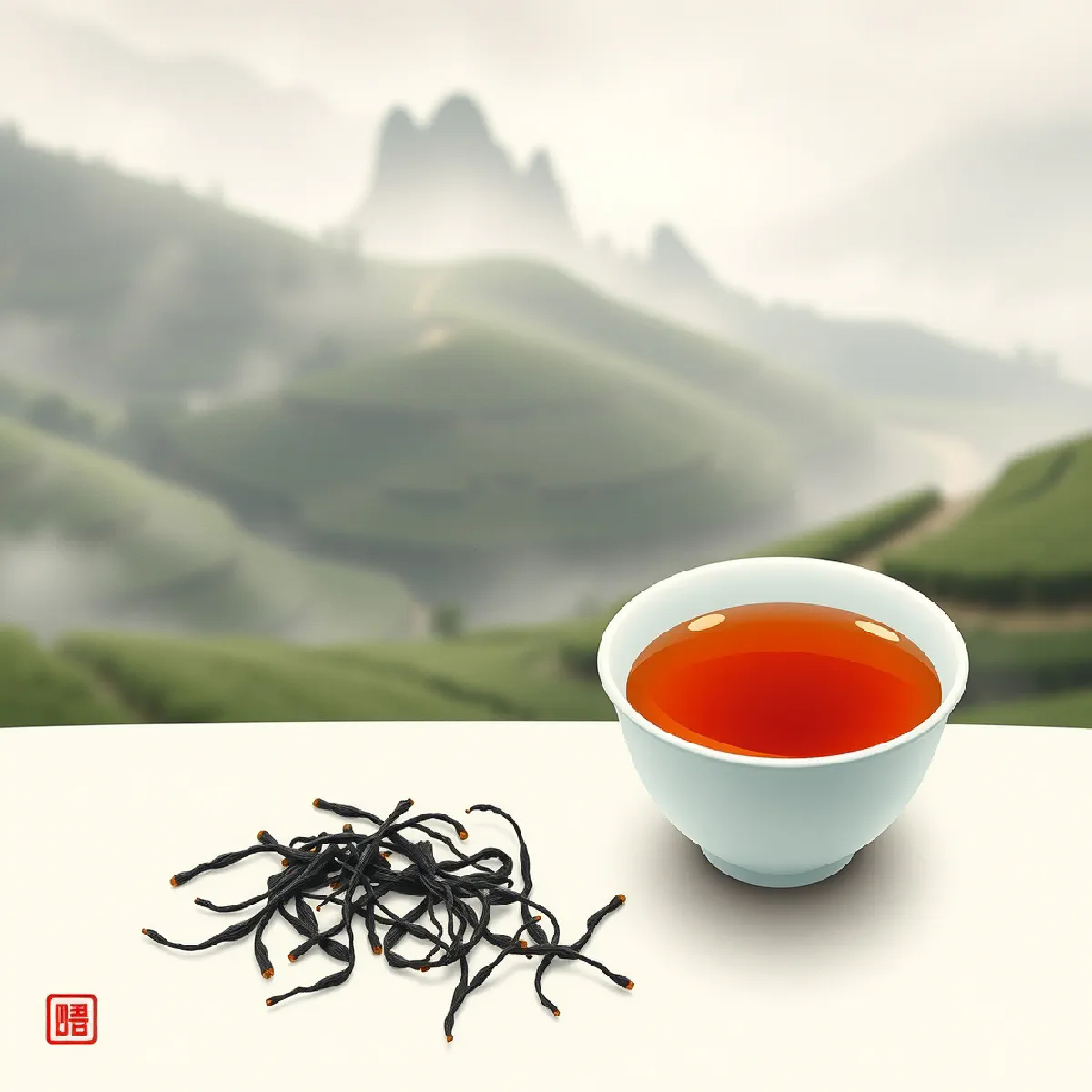
The Tea That Taught Europe to Say “Congou”
If you have read old British tea catalogues, you have met this tea under a name you probably did not recognize: Panyang Congou. “Congou” is the export-era spelling of 工夫 (gōngfu) — skill, patient labor — and it describes how the tea is made, not how it is brewed. A gongfu red tea is one sorted and rolled leaf by leaf until every strand in the tin looks like its neighbor. It has nothing to do with gongfu brewing, the small-pot method; the shared word is a coincidence that trips up nearly everyone.
Tanyang Gongfu was first produced around 1851 in Tanyang Village, Fu’an, in northeastern Fujian, when local makers adapted their leaf from green-tea processing to the red-tea methods then sweeping the province. It went out through the river port at Sanduao to Western Europe and Russia, and in 1915 it took a medal at the Panama-Pacific International Exposition in San Francisco — the same expo that made several Chinese teas famous abroad.
Where It Sits: The Three Minhong Gongfu Reds
Fujian produces three classic “gongfu” red teas, known collectively as Minhong (闽红). They are close cousins and constantly confused in shop listings:
| Tea | Region | Character |
|---|---|---|
| Tanyang Gongfu (坦洋工夫) | Fu’an | The benchmark. Brisk and sweet, with a clean high aroma and a golden ring on the liquor. |
| Zhenghe Gongfu (政和工夫) | Zhenghe | Roundest and heaviest body; made from the same big-leaf cultivar as Zhenghe white tea, so expect more golden tips. |
| Bailin Gongfu (白琳工夫) | Fuding | Thicker, darker liquor with a more floral top note and a shorter finish. |
If a vendor simply says “Fujian black tea,” ask which of the three it is. They are not interchangeable.
The Cultivar Question
The traditional plant is Tanyang Caicha (坦洋菜茶), a local small-leaf population variety — not a single clone, but a village seed-grown mixture, which is part of why older Tanyang material tastes layered rather than uniform. Since the 1980s producers have also used newer cultivars, most visibly Jin Mudan (金牡丹, “Golden Peony”), an aromatic cultivar that pushes the tea toward bright florals and honey.
This matters when you shop. Caicha-based Tanyang leans toward dried longan, brown sugar, and a soft malt; Jin Mudan versions are noticeably perfumed, almost oolong-like on the nose. Neither is “correct” — but if you order a second bag expecting the first one’s taste and the cultivar changed, you will be surprised.
How to Judge a Good One
| Feature | Good | Avoid |
|---|---|---|
| Dry leaf | Thin, tightly twisted, even in length, black with an oily sheen; some golden tips | Broken fragments, dull grey leaf, heavy dust at the bottom of the bag |
| Aroma | Sweet potato, longan, honey; florals if Jin Mudan | Sour, smoky, or flat cardboard |
| Liquor | Bright amber-red, clear, with a thin golden ring at the cup’s rim | Cloudy, muddy, or dull brown |
| Taste | Sweet and brisk with low astringency; a clean, lingering finish | Sharp tannic bite, thin watery body |
| Wet leaf | Coppery and supple, mostly intact bud-and-leaf sets | Ragged, blackened, or uniformly shredded |
The spent leaf is the hardest thing for a seller to fake. A real gongfu red opens into recognizable bud-and-one-or-two-leaf sets, because that is what was plucked.
Brewing: Go Cooler Than You Think
Tanyang Gongfu is the rare Chinese red tea that is better below boiling. Full 100°C water pulls out a dry edge and flattens the aroma that is the whole point of the tea.
Western / mug method
- 3 g per 350 ml (12 oz), 85°C / 185°F, 2–3 minutes
- Re-steep once, adding a minute
Gongfu / gaiwan method
- 5 g in a 100–120 ml gaiwan, 85–90°C / 185–195°F
- Quick rinse, then roughly 5s, 10s, 10s, 15s, 20s, 30s
- Expect six or more good infusions; the aroma sharpens around steep three
Drink it plain. The sweetness here is the selling point, and milk erases it — this is not an Assam substitute, whatever the old “congou” labels implied.
Buying Notes
Tanyang Gongfu is widely available but inconsistently labeled. A few things worth doing:
- Look for Fu’an (福安) on the origin line. “Fujian black tea” alone is not enough.
- Check for a stated cultivar. Vendors who name Caicha or Jin Mudan generally know what they are selling.
- Check the harvest year. Red tea keeps far better than green, but a two-year-old Tanyang has lost much of its high aroma.
- Buy a small size first. Because the cultivar mix varies by producer, a 25 g sample tells you more than any description.
Specialty vendors that regularly carry Minhong reds include Teavivre, Yunnan Sourcing, and Jing Tea Shop; grades and prices shift season to season, so compare the current listings rather than assuming last year’s offering is back.
Tanyang Gongfu is an easy tea to recommend and a hard one to buy badly once you know what to read on the label. It is sweet enough for a beginner, detailed enough to reward a gaiwan, and it carries 175 years of export history in a name most Western drinkers have been mispronouncing since the nineteenth century.