Gongfu vs. Western Brewing (工夫茶): Choosing the Right Method for Your Tea
Two Philosophies in One Cup
Every tea you own can be brewed two fundamentally different ways. Western brewing uses a little leaf, a lot of water, and one long steep — the familiar mug-and-teabag rhythm. Gongfu brewing (工夫茶, “tea with skill”) inverts all three: a lot of leaf, a little water, and many short steeps poured from a small gaiwan or teapot.
Neither method is “correct.” They answer different questions. Western brewing asks: how do I get a good, comforting cup with minimal fuss? Gongfu asks: what does this leaf have to say, infusion by infusion?
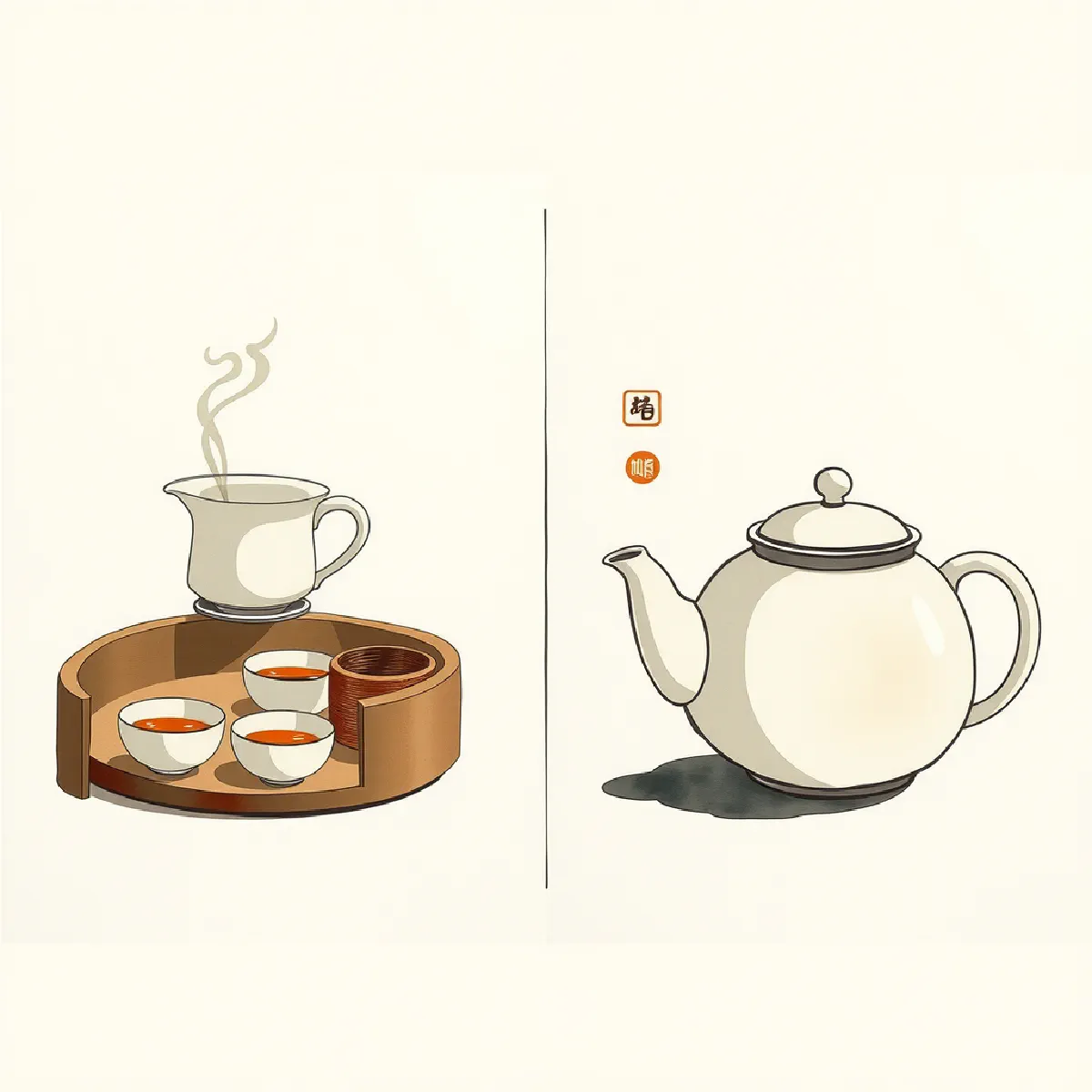
The Numbers Side by Side
| Western | Gongfu | |
|---|---|---|
| Leaf ratio | 1g per 70–100ml | 1g per 15–25ml |
| Vessel | Mug or large teapot (300–500ml) | Gaiwan or small pot (70–150ml) |
| Steep time | 2–5 minutes | 5–20 seconds, growing each round |
| Infusions | 1–2 | 5–10+ (great teas exceed 15) |
| Time commitment | 5 minutes | 30–60 minutes |
The gongfu ratio looks alarming at first — six or seven grams in a 100ml gaiwan is a vessel visibly crowded with leaf. That concentration is the whole trick: with so much leaf, a ten-second steep already carries full flavor, and the tea unfolds gradually instead of giving everything up in one long extraction.
How to Brew Gongfu Style
You need exactly three things: a small vessel (a 100ml gaiwan is the ideal first purchase — see our gaiwan guide ), a cup, and tea. Everything else is refinement.
- Fill by ratio. About 1g per 15ml of vessel volume — 6–7g for a 100ml gaiwan. A kitchen scale beats guessing; leaf density varies wildly between a fluffy white tea and a compressed pu-erh chunk.
- Rinse compressed teas. For pu-erh and other pressed teas, pour hot water over the leaves and discard after a few seconds. This wakes the leaves and washes off processing dust. Loose high-grade teas don’t need it.
- Flash-steep first. Start at 5–10 seconds. Pour everything out — leaf sitting in water between rounds is the most common beginner mistake, and it turns round three into bitter soup.
- Add time each round. Roughly 5–10 seconds per subsequent infusion, adjusting by taste. When the flavor thins, stretch the steep; when it’s gone, the session is over.
Temperature by tea type
| Tea type | Temperature | Notes |
|---|---|---|
| Green, yellow | 75–85°C | Short steeps; heat is the enemy of sweetness |
| White | 85–95°C | Bulky leaf may crowd the vessel — that’s normal |
| Oolong | 95–100°C | Rewards gongfu more than any other category |
| Red (black) | 90–95°C | Slightly gentler than boiling avoids harshness |
| Pu-erh & dark | 100°C | Full boil; rinse first; ripe pu-erh loves long late steeps |
Which Method for Which Tea?
Brew gongfu when the leaf has a story worth hearing: rock oolongs like Da Hong Pao , Phoenix Dancong, aged sheng pu-erh , or any tea you paid real money for. These teas change across infusions — floral early rounds, deeper mineral middles, sweet quiet finishes — and a single Western steep averages all of that into one note.
Brew Western for everyday drinking, work-desk tea, and breakfast-style red teas, where consistency and convenience matter more than nuance. A good Dianhong at 1g/80ml for three minutes is a genuinely excellent cup, not a compromise.
A practical middle path for busy days: grandpa style — a pinch of leaf in a tall glass, refilled with hot water as you drink. It’s how millions of people in China actually consume green tea daily.
Start Here
If you’re gongfu-curious, begin with an oolong — Tieguanyin or Dong Ding are forgiving, aromatic, and dramatically better brewed this way. Use a 100ml gaiwan, 6g of leaf, water just off the boil, and ten-second steeps. By the fifth infusion you’ll understand why people fuss about this: it’s the same leaf, telling a story you’d never hear from a mug.