Choosing a Tea Kettle (煮水壶): Material, Temperature, and the Pour
The One Piece of Teaware Every Cup Passes Through
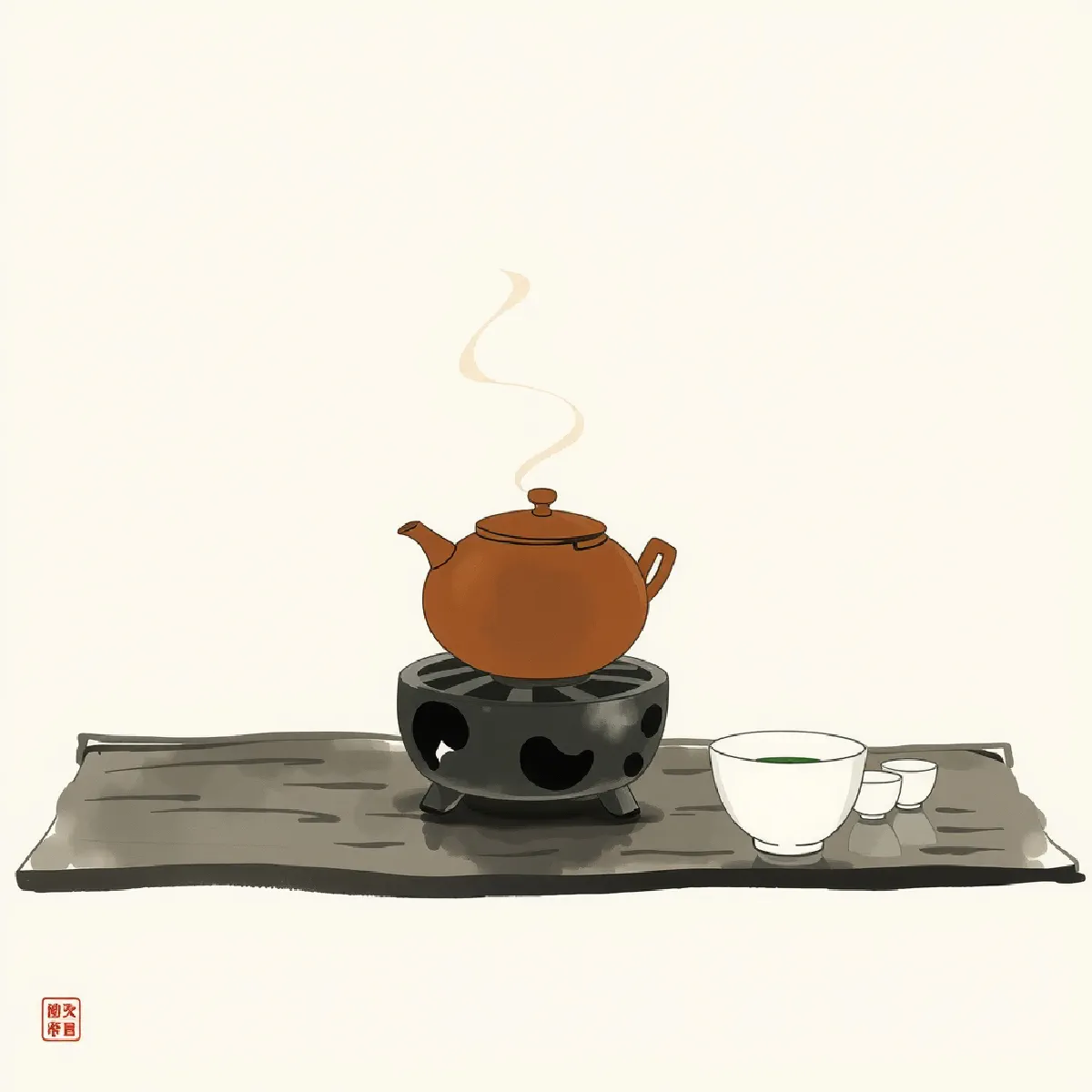
You can switch gaiwans, rotate through pots, and change the tea every day — but every single cup you ever brew passes through the kettle. It decides the temperature, which is the single most powerful variable in brewing, and in some cases it touches the water’s mineral content on the way out.
Most people buy a kettle once, by accident, and then spend years blaming the leaf for problems the kettle caused. It is worth about twenty minutes of thought.
What the Material Actually Does
The short version: glass and good stainless steel are both neutral. Anything that holds water against hot plastic is not.
| Material | Effect on the water | Verdict |
|---|---|---|
| Borosilicate glass | Chemically inert at boiling temperature; adds nothing, reacts with nothing | Best default. You also get to watch the boil. |
| 304 stainless steel | Non-reactive; a faint metallic note in the first few boils that fades | Equally good. Tougher, no thermal-shock worry. |
| Plastic interior / plastic lid underside | Warm plastic smell that transfers to the water, worst on the first boil of the day | Avoid for tea. |
| Unlined cast iron (tetsubin) | Leaches a trace of iron, slightly hardening the water; reputed to round out mouthfeel | A specialist choice, and a maintenance commitment. |
| Enamel-lined cast iron | None — the lining seals the iron off | Looks like a tetsubin, performs like ceramic. |
That last pair is the trap worth knowing: almost every cast-iron kettle sold today is enamel-lined inside. If you are buying one for the water-softening effect the forums talk about, you have to confirm the interior is bare iron — and then accept that bare iron must be dried over its own residual heat after every use or it rusts.
A persistent metallic taste from a steel kettle past the first week is not a break-in period; it is cheap steel.
Temperature Is the Feature Worth Paying For
A plain kettle gives you one temperature: boiling. Everything below that you get by pouring into another vessel and waiting, guessing at the drop.
That works, and generations of people did it. But a variable-temperature kettle removes the guesswork from the teas that are most sensitive to it:
| Tea | Target water |
|---|---|
| Green, yellow | 75–85 °C / 167–185 °F |
| White (buds) | 80–90 °C / 176–194 °F |
| Green oolong (Tieguanyin, Alishan) | 90–95 °C / 194–203 °F |
| Roasted oolong, red tea | 95–100 °C / 203–212 °F |
| Pu-erh, dark tea | Full boil |
Look for ±1 degree control and a hold function. The hold is what matters in a long gongfu session: without it, infusion eight is twenty degrees cooler than infusion one, and the tea appears to die of old age when it was really just getting cold. Presets are a convenience; the hold is the actual upgrade.
Reading the Boil, the Old Way
Before thermometers, Chinese tea drinkers read the water by eye and ear. Lu Yu set down three stages in the Cha Jing (茶经, c. 760 CE), and they still work as a free thermometer on a stovetop or in a glass kettle:
- Fish eyes (鱼目) — small bubbles rising singly, with a faint murmur. Roughly 75–85 °C: green tea water.
- Crab eyes / strings of pearls — streams of bubbles clinging to the walls and rising in chains. Roughly 85–95 °C: oolong and white tea water.
- Rolling waves — the whole surface surging and striking the sides. Full boil: pu-erh, dark tea, heavy roast.
Lu Yu also warned against going past the third boil, calling the water stale. He was right about the outcome, if not the mechanism — see below.
The Reboiling Question
You will be told never to reboil water, because boiling drives off dissolved oxygen and leaves the tea flat. This part is not true. Boiling at normal atmospheric pressure is not an effective way to strip dissolved gases, and whatever does leave goes back in as the water cools. Dissolved oxygen is not what you are tasting.
What is real is concentration. Every boil evaporates some water and leaves the minerals behind, so a kettle topped up and reboiled all day creeps steadily harder and more alkaline — which genuinely does dull a cup, through scum, flatter color, and muted high notes.
So the practical rule survives the debunking, with a better reason: boil what you will use, and start the next session with fresh water. Not because the oxygen is gone, but because the minerals have crowded in.
The Pour
A gooseneck spout gives you a narrow, slow, aimable stream — useful for wetting a mound of leaf evenly and for the high pour that stirs the leaves in a gaiwan. A wide spout gives you volume and speed, which matters when you are filling a large pot or a thermos.
For gongfu work, the gooseneck is the easier tool. It is not a requirement; plenty of excellent sessions are poured from a plain spout. Control over the first ten seconds of contact is simply more forgiving.
What to Buy
- If you own nothing: a borosilicate glass or 304 stainless variable-temperature kettle with a hold function. This covers every tea on the site.
- If you already have a plain kettle you like: keep it, add a cheap instant-read thermometer, and learn the three boils. That is a far better use of money than a second kettle.
- If you are chasing the tetsubin: buy it as a ritual object and an iron-water experiment, not as an upgrade to your brewing. Confirm the interior is unlined before you pay for one.